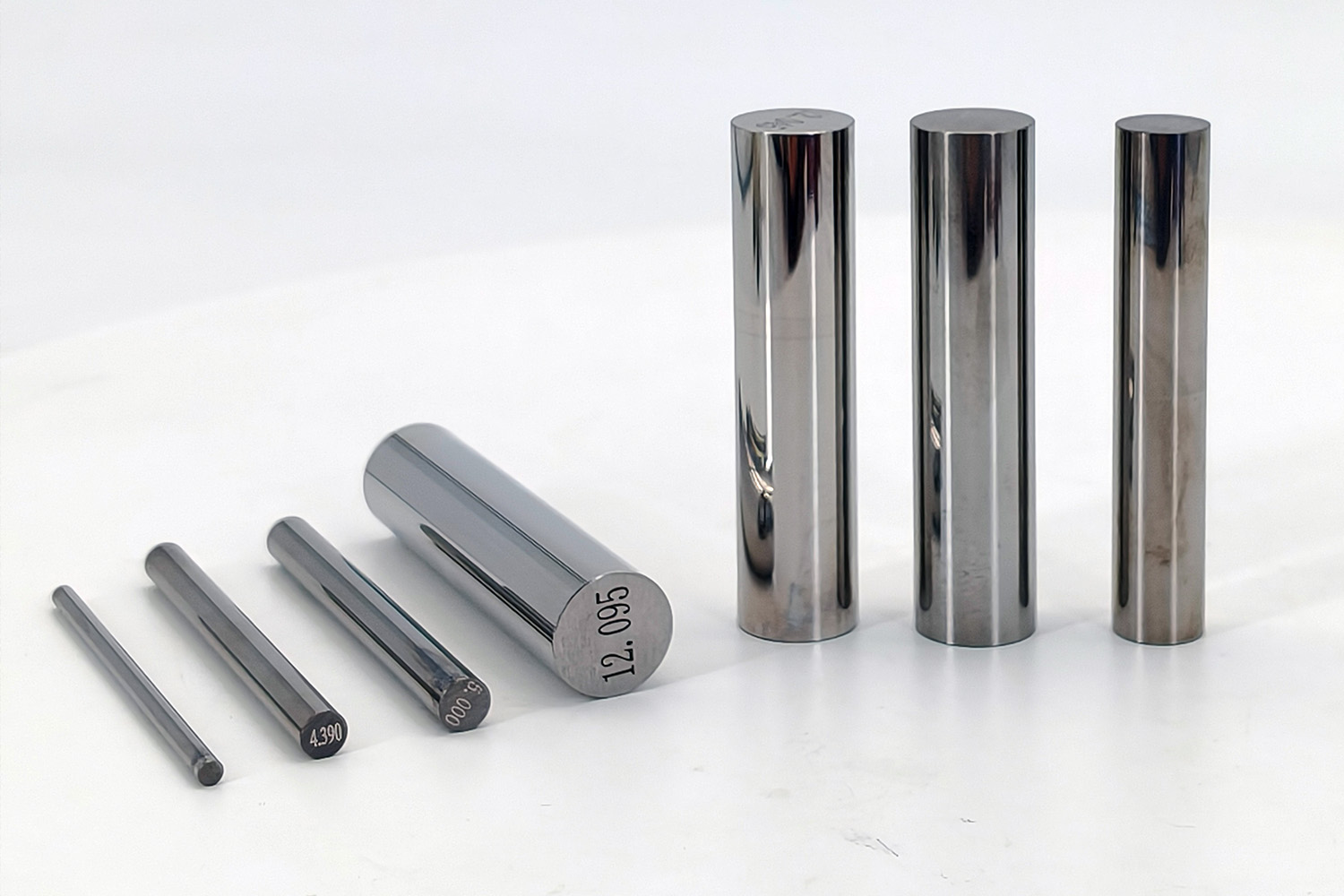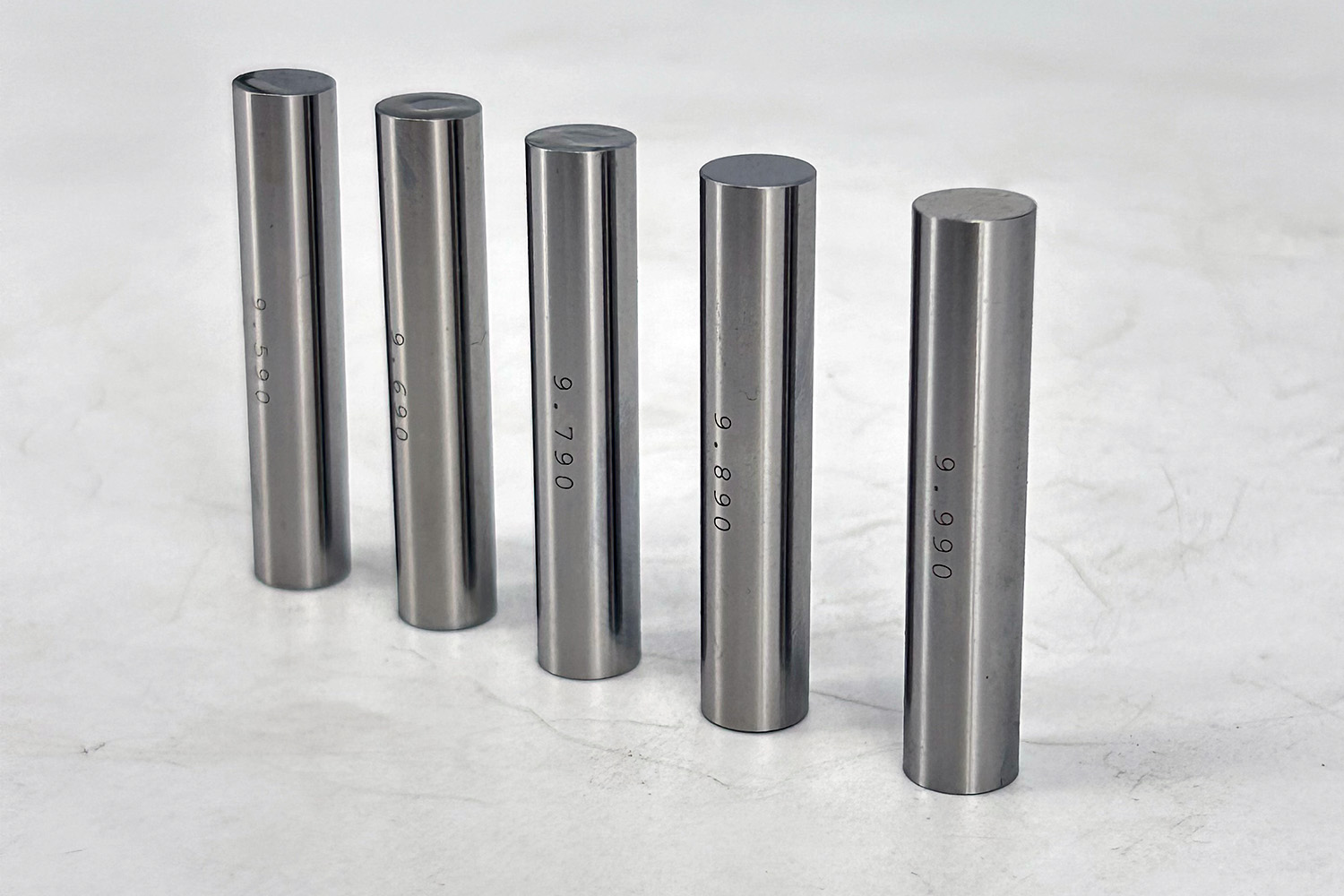
There is no single best gauge material for every inspection environment.
Steel gauges are often the practical choice for general inspection and cost-sensitive applications. Ceramic gauges are especially useful where corrosion resistance, clean handling, and non-magnetic behavior matter. Tungsten carbide gauges are often selected when repeated contact and wear resistance are the main concerns.
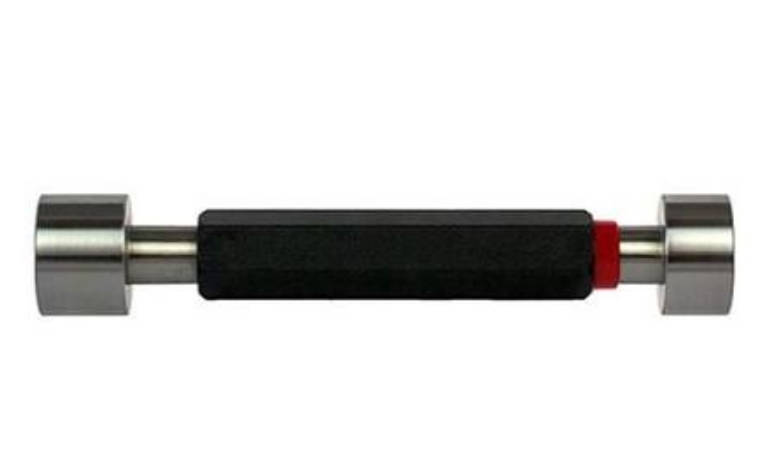
For pin gauges in particular, the correct material should be selected according to how often the gauge is used, what material it contacts, where it is stored, how operators handle it, and how much gauge replacement affects production.
This matters because material selection changes more than the initial purchase price. It can influence:
- Wear rate
- Corrosion risk
- Handling requirements
- Temperature response
- Recalibration frequency
- Replacement frequency
- Long-term inspection cost
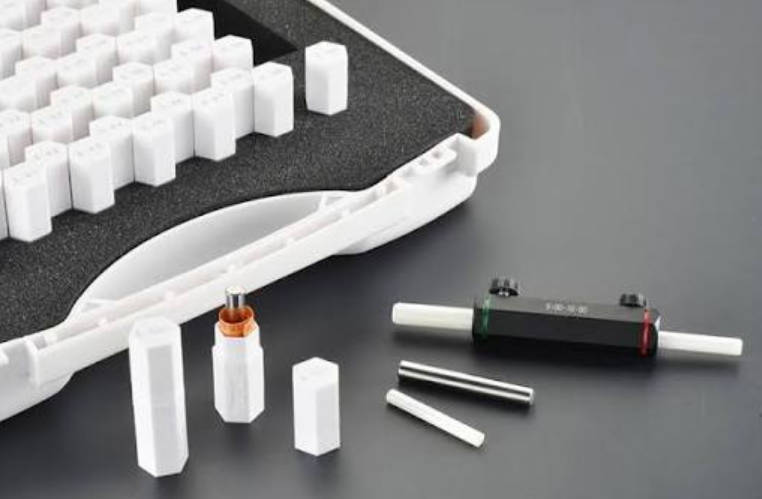
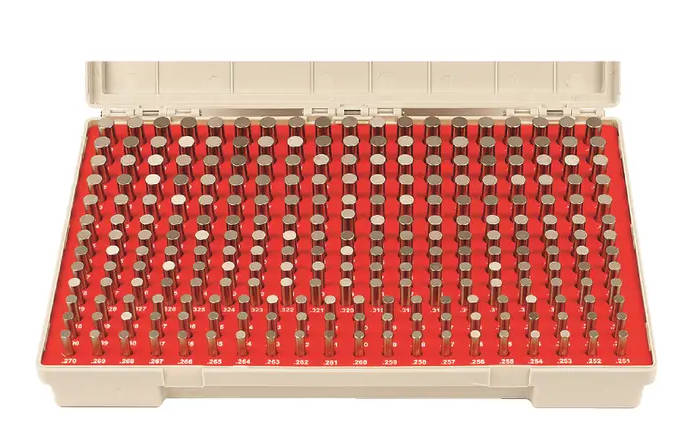
MISHUTE currently manufactures precision pin gauges in zirconia ceramic, tungsten carbide, and hardened steel configurations for different inspection requirements. (mishute.com)
Start With the Problem That Is Wearing Out Your Gauges
A common purchasing mistake is asking:
Which material is hardest?
A more useful question is:
Why are my current gauges becoming unreliable or expensive?
The answer usually falls into one of several categories.
| Your Main Problem | Material to Consider First | Why |
| Purchase budget is the priority | Hardened steel | Economical and practical for general inspection |
| Pins rust during storage | Ceramic | Strong corrosion resistance |
| Gauge is used hundreds or thousands of times repeatedly | Tungsten carbide | High wear resistance |
| Magnetic behavior creates inspection concerns | Ceramic | Non-magnetic material |
| Clean handling with minimal rust-preventive oil is preferred | Ceramic | Does not require the same rust protection as steel |
| Abrasive workpieces wear gauges quickly | Tungsten carbide | Strong resistance to contact wear |
| Operators frequently drop or mishandle gauges | Steel may be more practical | Hard ceramic/carbide materials still require careful impact handling |
| Standard workshop hole inspection | Steel | Balanced cost and performance |
This is why a useful gauge material comparison should begin with the inspection environment rather than a simple hardness ranking.
Metrology guidance from NIST similarly emphasizes that gauge material selection depends on factors including cost, thermal behavior, stability, wear, and how the gauge will actually be used. NIST also notes that steel is generally the lower-cost option, while carbide and ceramic-type gauge materials can provide better wear and corrosion characteristics. (工程计量工具箱)
Hardened Steel: The Practical Baseline
Steel is still a logical starting point for many gauge applications.
It is widely used in dimensional inspection because manufacturers understand its machining behavior, heat treatment, calibration characteristics, maintenance requirements, and cost structure.
For a factory performing routine CNC hole inspection, a hardened steel pin gauge may provide everything the process actually requires.
Where Steel Makes Sense
Consider steel when:
- Inspection volume is moderate
- The environment is relatively dry
- Gauges can be cleaned and stored properly
- Rust-prevention procedures are already established
- Operators need a large number of gauge sizes
- Initial investment matters
- Replacement gauges are easy to manage
For example, a CNC machining department may need dozens or hundreds of pin sizes for checking drilled and reamed holes.
Using an expensive high-performance material for every rarely used size may not provide a meaningful economic advantage.
MISHUTE offers hardened steel alongside ceramic and carbide within its pin gauge material options, allowing material selection to be matched to inspection frequency rather than applying one material to every gauge. (mishute.com)
The Main Limitation: Corrosion
Steel requires more attention to moisture and storage.
Fingerprints, high humidity, coolant residue, and inadequate protective oil can increase corrosion risk.
That does not make steel unsuitable for precision work. It means maintenance becomes part of the cost of ownership.
A low-cost steel gauge that is poorly cleaned or stored may ultimately become more expensive if it requires premature replacement.
Steel and Wear
Properly manufactured steel gauges can provide long service life under controlled conditions.
However, repetitive contact gradually wears any working surface.
When the same pin diameter is used continuously on a production line, wear becomes more important than it would for a pin that is removed from a set only occasionally.
This is where ceramic or tungsten carbide starts to become more interesting.
Ceramic Gauges: Choose Them When the Environment Is the Problem
Ceramic should not simply be described as a “premium version of steel.”
Its real value appears when the inspection environment creates problems that steel requires additional effort to control.
Zirconia ceramic pin gauges can be useful where:
- Humidity is difficult to control
- Rust prevention creates maintenance work
- Clean handling matters
- Magnetic behavior should be avoided
- Gauges are exposed to some corrosion-sensitive conditions
- Storage oil is undesirable
If corrosion and maintenance are causing more problems than mechanical wear, ceramic can be a stronger upgrade than tungsten carbide.
MISHUTE identifies zirconia ceramic pin gauges as corrosion-resistant and non-magnetic, making them suitable for inspection environments where rust prevention or magnetic behavior is undesirable. (mishute.com)
Why Ceramic Can Simplify Gauge Storage
Steel gauges commonly require corrosion-control procedures.
Ceramic does not rust in the same way as ferrous steel, which can simplify:
- Storage
- Handling
- Cleaning
- Long-term gauge management
This can matter when a gauge set contains many sizes that remain unused for long periods.
Imagine a set containing hundreds of precision pins.
With steel, inspection departments need to pay attention not only to the frequently used pins but also to gauges that remain in storage.
Ceramic reduces one of those maintenance variables.
Non-Magnetic Inspection
Ceramic is also useful when magnetic behavior is undesirable.
Possible examples include:
- Certain electronic components
- Magnetic assemblies
- Small precision parts that can cling to magnetized tools
- Clean inspection environments where magnetic particle attraction creates inconvenience
In these situations, material selection solves an operational problem rather than simply increasing hardness.
Ceramic Still Requires Care
Corrosion resistance does not mean maintenance-free measurement.
Ceramic pin gauges still require:
- Clean measurement surfaces
- Correct handling
- Controlled inspection technique
- Periodic verification
- Protection against impact damage
Hardness should never be confused with immunity to damage.
Dropping a precision gauge or striking it against a hard surface can still compromise a measurement tool.
Tungsten Carbide: When Wear Becomes the Cost Driver
Tungsten carbide becomes particularly attractive when inspection frequency is high.
Consider a production line where the same GO/NO-GO diameter is checked continuously throughout each shift.
The purchasing question changes.
Instead of asking:
What is the cheapest gauge?
The buyer should ask:
What does each inspection cost over the useful life of the gauge?
Tungsten carbide is particularly suitable when repeated gauging, abrasive contact, or production volume makes wear resistance more important than initial purchase cost.
MISHUTE positions tungsten carbide pin gauges for repeated, high-volume production inspection and lists high hardness and wear resistance among their principal material characteristics. (mishute.com)
A Typical High-Wear Scenario
Suppose one production line checks a specific bore diameter continuously.
The gauge may contact thousands of components while other gauges in the same QC cabinet are used only several times per week.
Buying an entire premium carbide set may not be necessary.
A more efficient strategy may be:
- Standard steel for rarely used sizes
- Carbide for the highest-cycle working sizes
- Ceramic where corrosion or non-magnetic requirements exist
This mixed-material approach can reduce total gauge expenditure.
Carbide for Abrasive Contact
Some workpiece materials and surface conditions produce more severe gauge wear than others.
When repeated sliding contact causes working gauges to lose dimensional integrity too quickly, carbide can provide a stronger wear-resistance strategy than conventional steel.
NIST dimensional metrology guidance reports excellent stability data for tungsten carbide and identifies carbide and other hard gauge materials as having better wear properties than steel in many gauge applications. (工程计量工具箱)
Carbide Does Not Remove the Need for Calibration
A wear-resistant gauge is still a measuring standard.
Carbide gauges should still be:
- Identified
- Cleaned
- Periodically verified
- Protected against damage
- Removed from service when inspection results become questionable
Longer expected wear life should not become a reason to stop monitoring the gauge.
Ceramic vs Steel vs Tungsten Carbide: Practical Comparison
| Selection Factor | Hardened Steel | Zirconia Ceramic | Tungsten Carbide |
| Initial cost | Lower | Higher | Higher |
| General workshop use | Very suitable | Suitable | Suitable |
| Wear resistance | Good | High | Very high |
| Corrosion resistance | Requires protection | Excellent | Strong |
| Magnetic behavior | Ferrous steel may be magnetic | Non-magnetic | Application/material dependent |
| Frequent high-volume use | Suitable | Suitable | Strong advantage |
| Humid environment | Requires maintenance | Strong advantage | Strong |
| Clean inspection | Requires oil-management consideration | Strong advantage | Suitable |
| Large economical gauge sets | Strong advantage | Higher investment | Higher investment |
| Abrasive repeated inspection | More wear expected | Good | Strong advantage |
| Impact handling | Generally more forgiving | Requires careful handling | Requires careful handling |
| Long-term operating cost | Depends heavily on usage | Can reduce corrosion-related maintenance | Can reduce wear-related replacement |
The table should not be read as a universal ranking.
A steel gauge used ten times per month may outlast the production program itself. In that case, paying for maximum wear resistance may provide little value.
A carbide pin used thousands of times per shift is a completely different economic calculation.
Buying Scenario 1: General CNC Machine Shop
A typical CNC workshop may inspect:
- Reamed holes
- Dowel holes
- Bearing bores
- Fixture holes
- Machined clearances
Inspection volume is distributed across many sizes rather than concentrated on one gauge.
Recommended Starting Point: Steel
Steel generally offers the most practical balance of:
- Cost
- Availability
- Accuracy
- Replaceability
- Range flexibility
A complete pin gauge set for precision hole inspection can therefore use steel where there is no specific corrosion, magnetic, or extreme-wear requirement.
Upgrading every pin purely because ceramic or carbide is harder may increase purchasing cost without solving an actual production problem.
Buying Scenario 2: Humid or Corrosion-Sensitive Inspection
Imagine a factory where gauges repeatedly develop surface rust because:
- Humidity is high
- Coolant reaches the inspection area
- Operators frequently touch gauges
- Storage procedures are inconsistent
The factory could improve steel-gauge maintenance.
Alternatively, it can reduce the sensitivity of the measurement system to corrosion.
Recommended Material: Ceramic
Ceramic becomes attractive because corrosion resistance addresses the root problem.
The value does not come only from gauge lifespan.
It may also reduce:
- Rust-prevention work
- Oil-related cleaning
- Storage concerns
- Unexpected gauge replacement
For this buyer, corrosion resistance may be more valuable than maximum wear resistance.
Buying Scenario 3: High-Volume 100% Inspection
Consider a production line performing continuous GO/NO-GO inspection on the same bore.
Here, gauge wear is no longer a secondary concern.
It directly affects:
- Inspection reliability
- Gauge replacement frequency
- Line interruptions
- Calibration planning
- Cost per inspected component
Recommended Material to Evaluate: Tungsten Carbide
The more frequently a gauge contacts a workpiece, the more meaningful wear resistance becomes.
Carbide can therefore justify its higher initial cost when the same working diameter experiences intensive repetitive use.
Buying Scenario 4: Clean or Non-Magnetic Inspection
Some buyers are less concerned about wear than about contamination and magnetic interaction.
Examples may involve small precision components or sensitive inspection environments.
Recommended Material: Ceramic
Zirconia ceramic can provide:
- Non-magnetic behavior
- Corrosion resistance
- Clean handling
- Reduced dependence on protective oil
This is a fundamentally different purchasing reason from choosing carbide.
Buying Scenario 5: A Large Set With Only Five Frequently Used Sizes
This is where material selection can become much smarter.
Assume a factory requires a large pin gauge set, but production data shows that only five diameters account for most inspection cycles.
Buying the full range in tungsten carbide may not be necessary.
A more cost-conscious configuration could be:
- Steel for general sizes
- Tungsten carbide for five high-cycle diameters
- Ceramic only where environmental conditions justify it
The most economical pin gauge system does not always use one material throughout the entire set.
This approach treats gauge material as an operating decision rather than a product-category decision.
Purchase Price vs Cost per Inspection
Comparing quotations only by unit price can produce a misleading result.
A more useful calculation is:
Total gauge cost = purchase cost + maintenance + verification + replacement + production interruption
Suppose Gauge A costs less but requires frequent replacement.
Gauge B costs more initially but remains within usable condition for much longer.
The more frequently the gauge is used, the more important the second part of the equation becomes.
When Steel Often Wins Economically
Steel can be the better economic choice when:
- Usage frequency is low to moderate
- Storage is controlled
- Corrosion is not a recurring problem
- Replacement is inexpensive
- The gauge size is rarely used
When Ceramic May Win Economically
Ceramic becomes increasingly attractive when:
- Rust is repeatedly damaging gauges
- Maintenance labor is significant
- Protective oil causes handling inconvenience
- Clean storage matters
- Non-magnetic behavior has operational value
When Carbide May Win Economically
Carbide becomes more attractive when:
- Inspection frequency is extremely high
- Workpieces are abrasive
- Gauge wear repeatedly causes replacement
- Production cannot tolerate frequent gauge changes
- Critical working sizes dominate inspection volume
The correct comparison is therefore not simply ceramic vs steel vs carbide gauge price.
It is the expected cost of maintaining reliable inspection.
Do Not Choose Gauge Material Before Confirming Tolerance
Material cannot compensate for an incorrectly specified gauge.
Before discussing ceramic, steel, or carbide, confirm:
- Nominal diameter
- Plus or minus tolerance direction
- Gauge tolerance class
- Length
- Required increments
- GO/NO-GO configuration
- Individual pin or complete set
- Inspection frequency
- Calibration requirements
MISHUTE’s pin gauge solutions currently include multiple tolerance classes, individual pins, sets, and customized sizes in addition to the three primary material choices. (mishute.com)
A precisely manufactured pin made from the wrong material may still be usable.
A premium-material pin manufactured to the wrong dimension is not.
Specification always comes first.
Thermal Behavior Matters More as Precision Increases
Gauge temperature is often overlooked during material selection.
Dimensional inspection is normally referenced to controlled temperature conditions. A gauge that has just been held in a warm hand or moved from a different environment may not immediately be at the same temperature as the workpiece or inspection room.
Different gauge materials have different thermal characteristics.
NIST notes that material selection for dimensional artifacts should consider thermal expansion and thermal diffusivity in addition to wear and cost. It also points out that matching a steel gauge with a steel workpiece can sometimes simplify temperature-related dimensional behavior, while zirconia may require longer thermal stabilization because of different thermal diffusivity. (工程计量工具箱)
For routine shop-floor GO/NO-GO checks this may not dominate the purchasing decision.
For tighter metrology work, however, it deserves attention.
Harder Does Not Automatically Mean More Accurate
This is another common misunderstanding.
Tungsten carbide can offer greater wear resistance than conventional steel, but this does not automatically mean that every carbide gauge measures more accurately.
Measurement accuracy also depends on:
- Manufacturing tolerance
- Roundness
- Cylindricity
- Surface finish
- Calibration quality
- Temperature control
- Gauge cleanliness
- Operator technique
- Wear condition
Material primarily changes how the gauge behaves during use; it does not replace dimensional manufacturing and calibration quality.
A properly manufactured and maintained steel gauge can be entirely appropriate for precision inspection.
Material should therefore be evaluated alongside specification quality.
What to Send When Requesting a Pin Gauge Quote
Instead of asking only for a “carbide pin gauge,” provide the inspection requirement.
A useful RFQ may include:
| Information | Example |
| Gauge type | Pin gauge |
| Diameter | 5.000 mm |
| Required tolerance | According to drawing / specified gauge class |
| Direction | Plus, minus, or bilateral |
| Material preference | Steel / ceramic / carbide |
| Length | Standard or custom |
| Quantity | 10 pcs |
| Inspection frequency | Continuous production inspection |
| Workpiece material | Hardened machined component |
| Environment | Production floor |
| Documentation | Inspection report / calibration requirement |
| Special requirement | GO/NO-GO handle |
This gives the supplier enough information to evaluate whether the requested material actually suits the inspection.
If you are unsure which material should be specified, provide the application first rather than selecting a material based only on hardness.
A Simple Material Decision Tree
Use this sequence when specifying your next pin gauge.
Is cost the main concern and inspection conditions normal?
Choose hardened steel as the starting point.
Is rust, humidity, cleanliness, or magnetism the main problem?
Evaluate zirconia ceramic.
Is frequent contact wear the main problem?
Evaluate tungsten carbide.
Are only a few sizes used continuously?
Consider combining materials rather than upgrading the entire set.
Is the measurement extremely sensitive to environmental conditions?
Review thermal behavior, calibration strategy, and tolerance together with material selection.
This decision process is more useful than asking which material is universally “best.”
What to Look for Beyond the Material
When comparing gauge suppliers, evaluate more than whether they offer ceramic or carbide.
Ask about:
- Available tolerance classes
- Diameter range
- Size increments
- Roundness and cylindricity control
- Inspection environment
- Traceability
- Calibration documentation
- Custom lengths
- GO/NO-GO configurations
- Material consistency
- Non-standard size capability
MISHUTE manufactures steel, zirconia ceramic, and tungsten carbide pin gauges and supports individual pins, sets, customized dimensions, and inspection documentation. (mishute.com)
Buyers sourcing several gauge types can also review MISHUTE as a precision gauge manufacturer for additional dimensional inspection requirements. (mishute.com)
Frequently Asked Questions
Which pin gauge material is best?
There is no universal best material. Steel is often suitable for cost-effective general inspection, ceramic is useful for corrosion-resistant and non-magnetic applications, and tungsten carbide is well suited to high-wear repetitive inspection.
Are ceramic pin gauges better than steel pin gauges?
Ceramic can be better when corrosion resistance, clean handling, or non-magnetic behavior matters. Steel may be the more economical choice for general workshop inspection where these issues are controlled.
Are tungsten carbide gauges better than ceramic gauges?
Not in every application. Tungsten carbide is particularly attractive for high wear and repetitive inspection. Ceramic may be more attractive where corrosion resistance and non-magnetic behavior are the primary requirements.
Why use tungsten carbide pin gauges?
Tungsten carbide pin gauges are commonly selected when frequent workpiece contact causes excessive gauge wear. Their high wear resistance makes them suitable for high-volume inspection and heavily used GO/NO-GO sizes.
Do ceramic pin gauges rust?
Zirconia ceramic does not rust like ferrous steel, making ceramic gauges useful for humid, corrosion-sensitive, and clean inspection environments.
Are steel pin gauges suitable for precision inspection?
Yes. Properly manufactured, calibrated, maintained, and stored steel pin gauges can be suitable for many precision inspection applications. More expensive material does not automatically mean higher measurement accuracy.
Which gauge material is suitable for high-volume production?
Tungsten carbide is often considered where repeated contact wear dominates the gauge life. Ceramic may also provide good wear performance, while steel remains practical when inspection frequency is moderate.
Which pin gauge material is best for a CNC machine shop?
Hardened steel is commonly a practical starting point for general CNC inspection because it balances cost and performance. Ceramic or carbide can then be used for sizes or environments where corrosion or wear creates a specific problem.
Should I buy an entire tungsten carbide pin gauge set?
Not necessarily. If only several diameters experience intensive use, using carbide for high-cycle sizes and steel for lower-use sizes may provide a better balance of initial cost and long-term wear resistance.
Do ceramic and carbide gauges still need calibration?
Yes. Wear-resistant or corrosion-resistant materials are still precision measuring tools and should be verified according to usage, tolerance requirements, quality procedures, and inspection risk.
Conclusion: Choose the Failure Mode, Then Choose the Material
The most useful way to compare ceramic vs steel vs tungsten carbide gauges is not to rank them from good to bad.
Instead, identify what matters most in your inspection process.
Choose steel when you need practical, economical general-purpose inspection. Choose ceramic when corrosion resistance, clean handling, or non-magnetic behavior is important. Choose tungsten carbide when intensive repetitive use makes wear resistance the dominant concern.
For many factories, the most cost-effective solution may even use several materials within the same inspection system.
Start with the workpiece, tolerance, inspection frequency, environment, and expected gauge usage. Then select the material that addresses the actual operating problem.
For standard sets, individual sizes, GO/NO-GO configurations, and material-specific requirements, explore MISHUTE precision pin gauge options or submit your inspection specification for material evaluation.