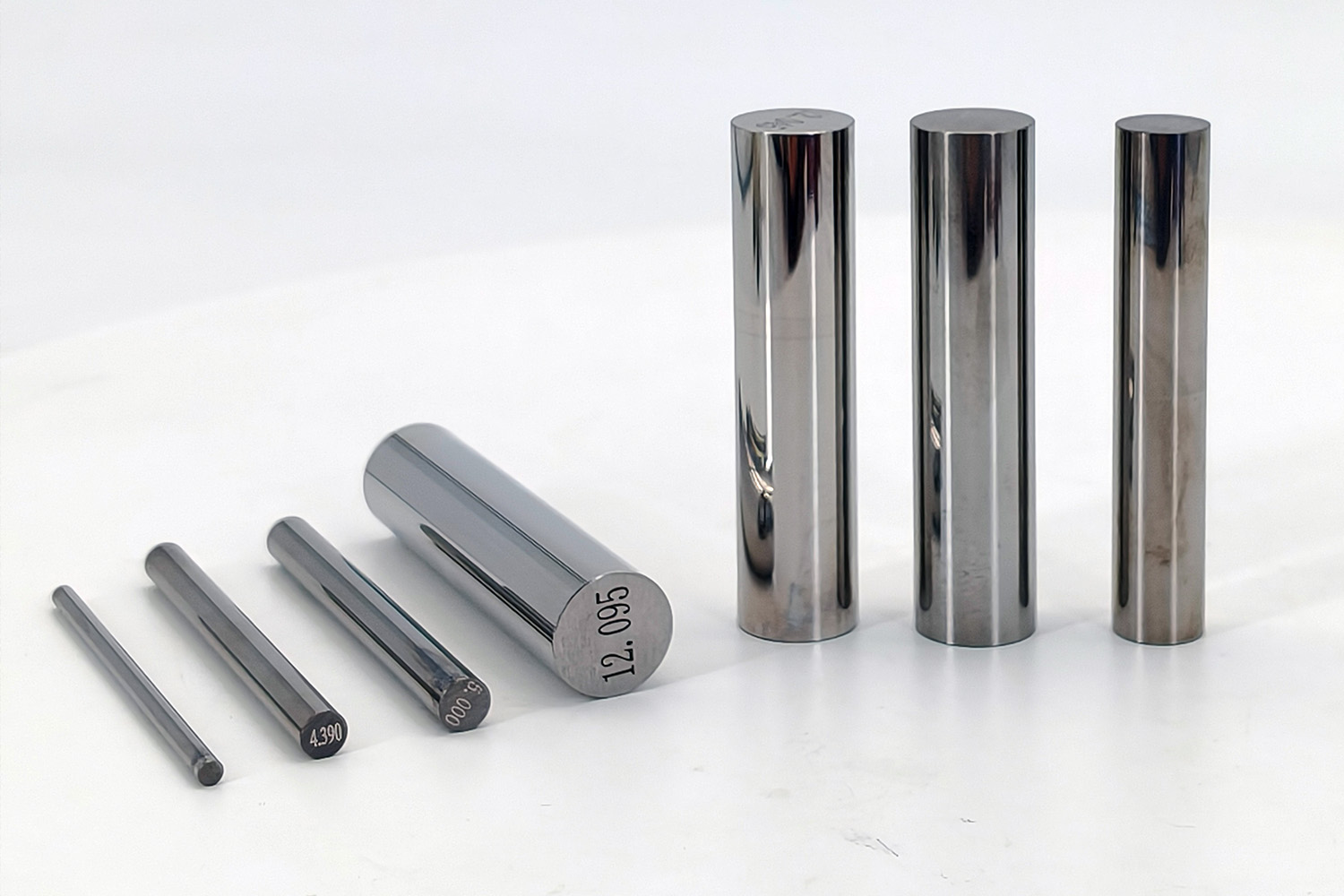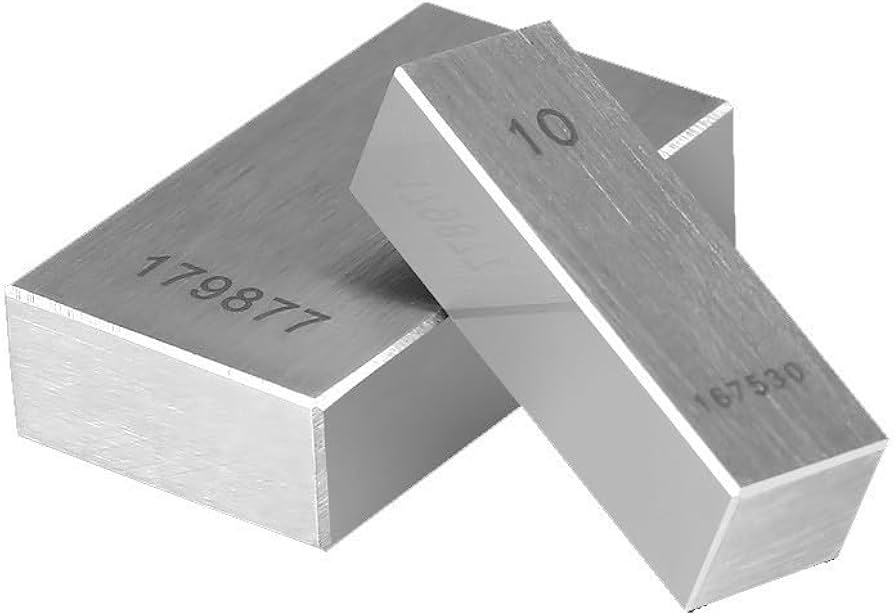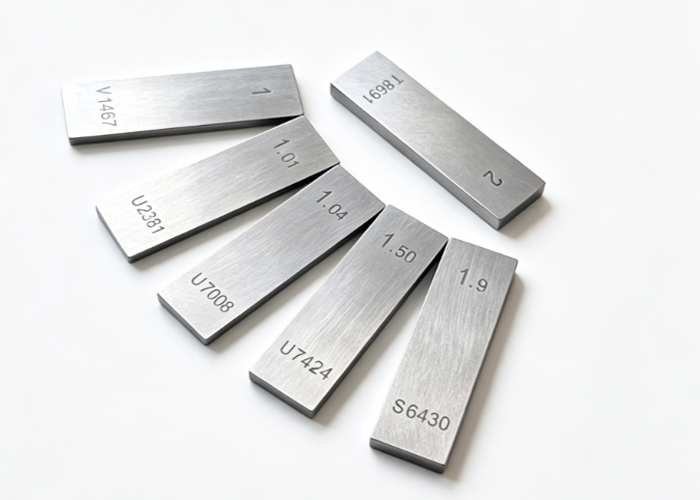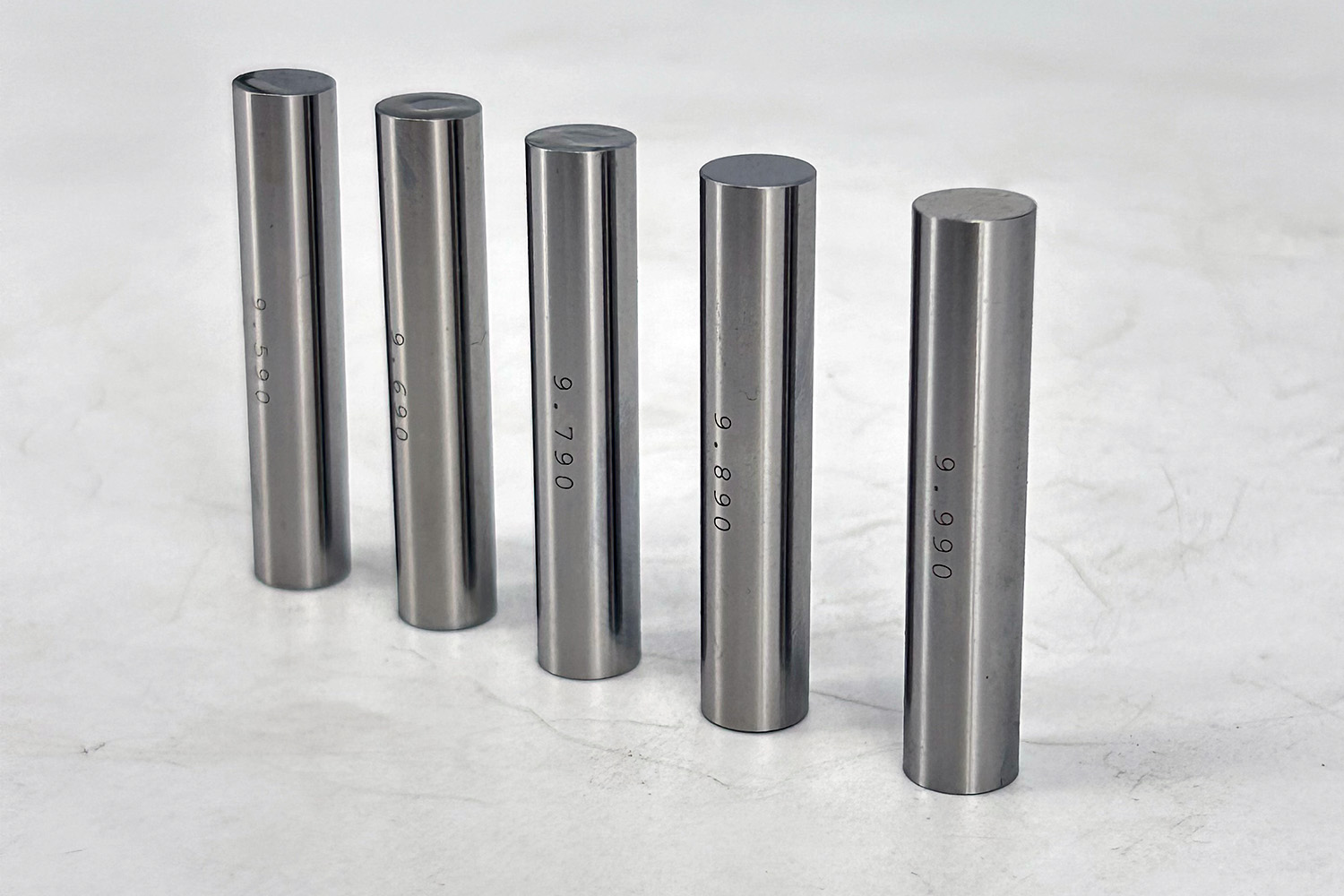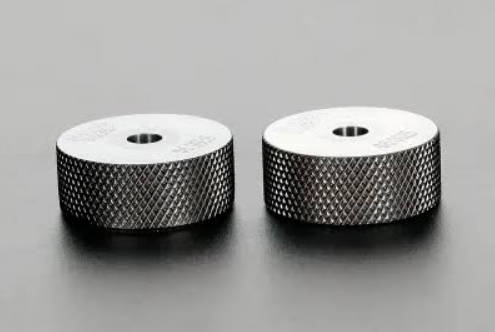
Choosing the right material for precision reference standards directly influences measurement accuracy, recalibration frequency, and total toolroom operating costs. For toolmakers, quality control managers, and metrology engineers evaluating a gauge block materials comparison, the selection comes down to three primary options: alloy steel, zirconia ceramic, and tungsten carbide.
Each material exhibits distinct physical behaviors under shop-floor handling, thermal variations, and mechanical friction. Steel remains the most economical baseline option with optimal thermal expansion matching for steel workpieces. Zirconia ceramic delivers superior corrosion resistance and wear life with virtually zero risk of burr formation. Tungsten carbide provides exceptional rigidity and edge stability for continuous high-friction checking tasks.
This guide examines the core metallurgical and operational differences among these three materials, details how thermal expansion affects shop-floor accuracy, outlines total ownership costs, and presents an engineering framework to help buyers configure the most reliable precision gauge blocks for their measurement environments.
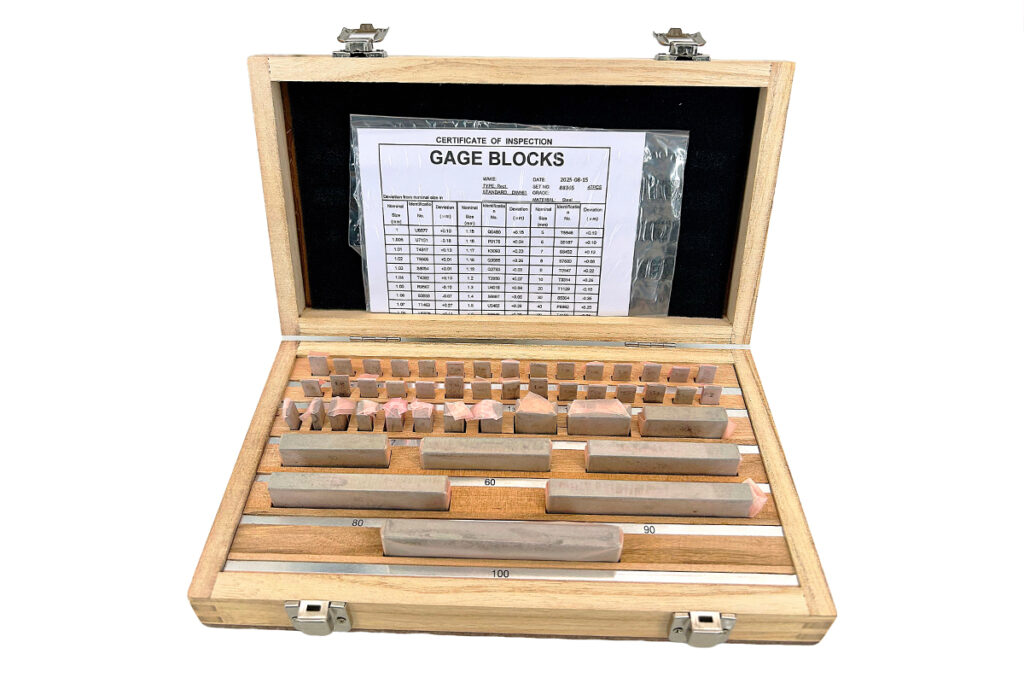
Head-to-Head Comparison: Physical Properties & Performance Metrics
Physical properties determine how a reference standard interacts with ambient temperature, humidity, and sliding friction during everyday calibration cycles.
| Performance Metric | Alloy Steel | Zirconia Ceramic | Tungsten Carbide |
| Typical Hardness | ~800 HV (approx. 64–65 HRC) | ~1200–1400 HV | ~1400–1500 HV |
| Coefficient of Thermal Expansion (CTE) | Approx. 11.5 × 10⁻⁶ / K | Approx. 9.5–10.0 × 10⁻⁶ / K | Approx. 4.5–5.0 × 10⁻⁶ / K |
| Corrosion Resistance | Low (requires oiling and desiccant storage) | Inert (completely rust-proof) | High (resistant to standard shop fluids) |
| Abrasion & Wear Resistance | Standard baseline | 5× to 10× greater than steel | Highly wear-resistant |
| Burr Formation Tendency | Scratches produce raised burrs | Scratches chip clean (no raised burrs) | Highly resistant to nicking |
| Wringability Quality | Excellent across flat finishes | Exceptional; stays wrung without fluid | Excellent; requires clean surfaces |
| Thermal Conductivity | High | Low | Medium-High |
| Relative Initial Cost | Economical | Premium | Moderate to High |
Note: Exact physical values vary based on specific alloy composition, sintering density, manufacturing tolerance, and ISO/ASME grade specifications. Technical parameters must be verified against manufacturer inspection certificates.
In-Depth Analysis: Pros, Cons, and Working Characteristics
Steel Gauge Blocks: The Proven Industry Benchmark
Alloy steel has served as the baseline material in dimensional metrology for over a century. High-grade carbon or chrome alloy steel blocks undergo controlled heat treatment and cryogenic stabilization to prevent dimensional drift over prolonged storage.
Advantages:
Thermal Matching: Steel features a coefficient of thermal expansion (~11.5 × 10⁻⁶ / K) virtually identical to common cast iron, carbon steel, and tool steel components, minimizing compensation calculations in non-temperature-controlled spaces.
Cost-Effectiveness: Steel blocks offer the lowest initial acquisition cost for standard workshops, training centers, and secondary calibration stands.
Established Wringing Characteristics: Finely lapped steel surfaces provide reliable wringing performance when used with standard wringing fluids.
Limitations:
Corrosion Vulnerability: Bare skin contact transfers acids and moisture that cause rapid oxidation and pitting if blocks are not thoroughly cleaned and oiled after each shift.
Raised Burrs: Mechanical impacts or sliding grit can raise microscopic metallic burrs along the edges. Even a sub-micron burr prevents proper wringing and compromises measurement stacks until stoned down.
Ceramic (Zirconia) Gauge Blocks: Ultimate Wear & Corrosion Resistance
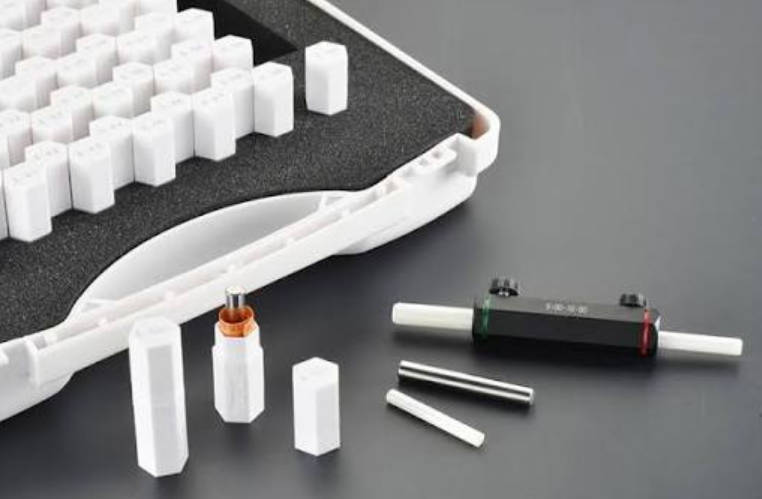
Manufactured from ultra-fine zirconium oxide (ZrO₂) powders through high-pressure isostatic pressing and sintering, ceramic blocks serve demanding environments where longevity and corrosion resistance take priority.
Advantages:
Total Rust Immunity: Zirconia ceramic does not oxidize or react to cutting coolants, atmospheric humidity, or human sweat. Operators can handle blocks without white cotton gloves or post-use rust-preventative coatings.
Zero Raised Burrs: If accidentally struck by an external object, ceramic micro-chips locally along the impact perimeter rather than raising a deformed burr. The flat reference plane remains geometrically true, maintaining wringing accuracy.
Exceptional Wear Life: Ceramic exhibits up to ten times the abrasion resistance of standard steel, dramatically extending recalibration intervals in high-throughput inspection cells.
Limitations:
Thermal Expansion Difference: While closer to steel than carbide, ceramic expands at a slightly lower rate (~9.5–10.0 × 10⁻⁶ / K), which requires mathematical compensation when measuring long steel dimensions under wide temperature fluctuations.
Initial Purchase Premium: High material and diamond-lapping processing costs translate into a higher entry price per set.
Tungsten Carbide Gauge Blocks: Maximum Rigidity for High-Friction Environments
Tungsten carbide combines heavy tungsten particles cemented in a cobalt or nickel binder. It offers extreme structural density and hardness, making it a common choice for dedicated workshop master blocks and caliper inspection stands.
Advantages:
Superior Surface Hardness: With hardness ratings exceeding 1400 HV, tungsten carbide resists scratching even when repeatedly slid against cast iron machine beds or hardened steel anvils.
Edge Integrity: Sharp reference edges resist rounding over years of daily shop usage.
Wear-Block Protection: Often deployed as thin “wear blocks” wrung onto the exposed outer ends of standard steel stacks to absorb contact abrasion and extend the lifespan of primary steel sets.
Limitations:
Low Thermal Expansion: A CTE of roughly 4.5–5.0 × 10⁻⁶ / K means carbide expands at less than half the rate of structural steel. In non-controlled thermal environments, differential expansion causes significant tracking divergence on large components.
Weight and Brittleness: Tungsten carbide is substantially heavier than steel and ceramic, which affects tactile feedback on larger blocks and poses chipping hazards if dropped onto hard concrete flooring.
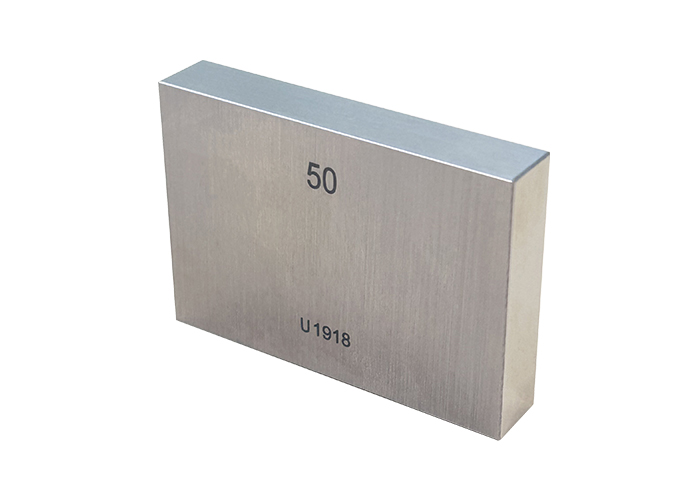
Engineering Decision Framework: Matching Materials to Working Environments
Selecting an optimal material requires balancing ambient operating conditions, measurement frequency, and part geometry rather than simply comparing raw hardness ratings.
| Application Environment | Primary Recommendation | Secondary / Alternative Option | Engineering Selection Logic |
| Metrology Lab (Controlled 20°C) | Ceramic (Grade 0 or Grade K) | Alloy Steel (Grade 0) | Eliminates oil-cleaning routines; stable over multi-year recalibration intervals. |
| Shop Floor / CNC Centers (Fluctuating Ambient Temp) | Alloy Steel (Grade 1 or Grade 2) | Ceramic (Zirconia) | Identical CTE matches steel/iron parts naturally; choose ceramic if cutting fluids or acid mists cause severe rust risks. |
| Dedicated Gage Calibration (Micrometers, Calipers, Anvils) | Tungsten Carbide | Steel with Carbide Wear Blocks | Maximum surface hardness prevents localized grooving from hardened tool anvils during sliding contact. |
Beyond Purchase Price: Total Cost of Ownership & Maintenance Overhead
Procurement evaluations that focus exclusively on initial set costs often overlook cumulative operating and maintenance expenses over the tool’s usable lifespan.
| Cost Dimension | Alloy Steel | Zirconia Ceramic | Tungsten Carbide |
| Initial Acquisition Cost | Lowest Economical upfront budget; cost-effective for standard tooling. | Highest Carries a premium due to diamond lapping and sintering processes. | Moderate to High Higher raw material cost than steel; competitive for specialized sets. |
| Handling & Cleaning Overhead | High Requires petroleum degreasing before wringing and anti-rust coating before storage. | Minimal Wipe clean with dry microfiber cloth; no protective oil baths or gloves needed. | Low to Moderate Standard wiping; less sensitive to humidity than steel, but requires dry storage. |
| Deburring & Surface Stoning | Frequent Scratches create raised burrs that require Arkansas stoning before wringing. | None Impacts micro-chip cleanly along edges; zero raised deformation. | Very Rare Extreme hardness resists nicking and surface deformation. |
| Recalibration Frequency | High Standard 6- to 12-month cycles due to abrasion and mechanical wear. | Low Extended wear life allows intervals to be safely doubled once verified. | Low Maintains reference face flatness across high-contact sliding cycles. |
| Scrap / Premature Replacement Risk | Moderate to High Fingerprint acids and moisture can permanently pit blocks within 48 hours. | Very Low Rust-proof; risk is limited to heavy physical drops on concrete. | Low Resistant to shop fluids; risk primarily relates to heavy drop-impact fracture. |
| Overall TCO Evaluation | Best for low-frequency use where recurring labor costs remain manageable. | Best long-term ROI in high-throughput labs, offsetting initial cost within 1–2 years. | Most economical choice for high-sliding-friction tool-setting stands. |
Sourcing Precision Gauge Blocks: Custom Sets & Bulk Procurement
When sourcing standard metric or imperial reference blocks from an industrial gauge blocks manufacturer, procurement and engineering teams should standardize inspection criteria to streamline factory delivery.
Procurement Checklist for Technical Buyers:
Material Specification: Confirm pure alloy steel, high-purity yttria-stabilized zirconia (Y-TZP), or sub-micron tungsten carbide.
Tolerance Grade: Match your application requirements according to ISO 3650, DIN EN ISO 3650, or ASME B89.1.9 standards:
Grade K / Grade 00: Calibration reference masters for primary metrology labs.
Grade 0: Inspection standards for setting high-precision optical and mechanical comparators.
Grade 1: Production setting masters for toolrooms and precision grinding checks.
Grade 2: General workshop inspection on machine beds and assembly lines.
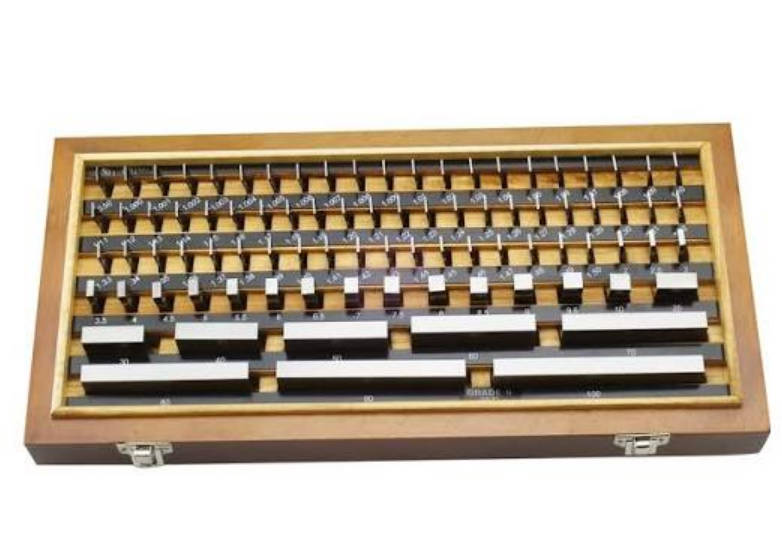
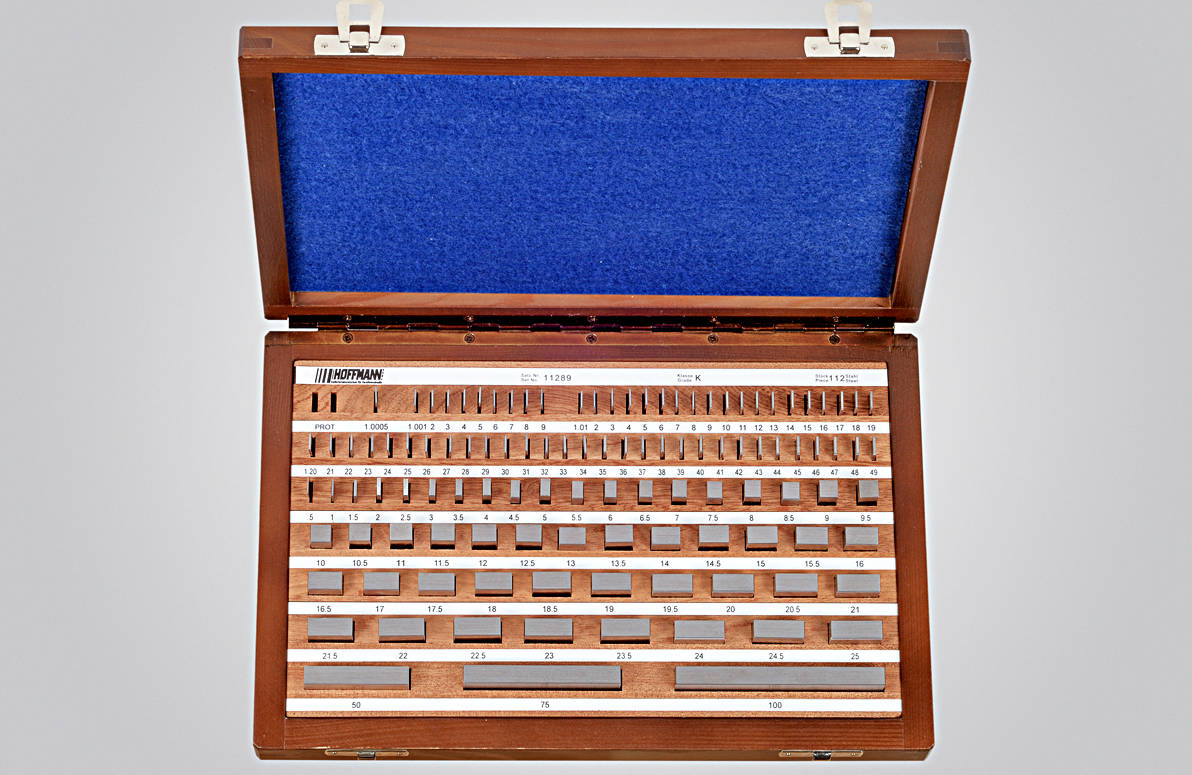
Block Count & Configuration: Standard sets range from 32 pieces for basic tool setting to 87, 103, or 112 pieces for comprehensive multi-combination stacks.
Calibration Documentation: Specify whether factory inspection sheets or accredited third-party calibration certificates (ISO/IEC 17025) are required for regulatory compliance.
For facilities seeking tailored configurations, special step dimensions, or replacement pieces for damaged sets, partnering with Mihe ensures access to precise dimensional tolerances, custom block markings, and dedicated technical support for industrial tooling distribution.
Key Takeaways
Steel remains the thermal standard: Alloy steel gauge blocks provide the most natural thermal expansion matching for manufacturing facilities machining carbon steel and cast iron in non-temperature-controlled environments.
Ceramic delivers the lowest maintenance overhead: Zirconia ceramic blocks are completely rust-proof, scratch without raising burrs, and last up to ten times longer than steel, significantly reducing labor and replacement expenses over long-term use.
Tungsten carbide dominates localized wear resistance: Carbide blocks excel in high-sliding-friction tasks, serving as protective wear blocks or dedicated reference standards for checking micrometers and calipers.
Thermal environment dictates shop accuracy: In controlled 20°C laboratories, material CTE differences are negligible; on open factory floors, matching the gauge block material’s CTE to the workpiece material prevents dimensional drift.
Total cost of ownership outweighs initial pricing: Although ceramic sets carry a higher entry price, their elimination of daily anti-rust maintenance and lower calibration failure rates offset upfront costs across high-throughput production cycles.
Frequently Asked Questions
Can ceramic and steel gauge blocks be wrung together safely?
Yes. High-quality zirconia ceramic blocks can be wrung directly to alloy steel blocks or tungsten carbide wear blocks without damaging either material. However, both surfaces must be clean and free of abrasive debris to prevent the harder ceramic from scratching the softer steel block under sliding contact pressure.
Do ceramic gauge blocks break or shatter if dropped on the shop floor?
Modern ceramic blocks are engineered from transformation-toughened zirconia rather than brittle domestic porcelain. While a severe drop onto concrete from a high workbench can chip corners or crack the block, normal workshop handling and minor benchtop slips typically result in small localized micro-chips along the edge rather than catastrophic shattering. Crucially, ceramic does not deform upward, so the flat working face remains true.
Why does tungsten carbide feel heavier than standard steel gauge blocks?
Tungsten carbide has a density of approximately 14.5 to 15.0 g/cm³, which is nearly double the density of alloy tool steel (~7.8 g/cm³) and zirconia ceramic (~6.0 g/cm³). This extra mass provides a distinct solid feel during handling, though larger blocks require deliberate care to prevent accidental drops.
How often should gauge blocks of different materials be recalibrated?
Standard industrial practice specifies annual (12-month) recalibration cycles for master sets in controlled environments, and 6-month cycles for high-use shop-floor sets. Due to superior abrasion resistance, ceramic and tungsten carbide blocks consistently maintain calibration longer than steel, often allowing facilities to safely extend calibration intervals after establishing historical dimensional stability data.