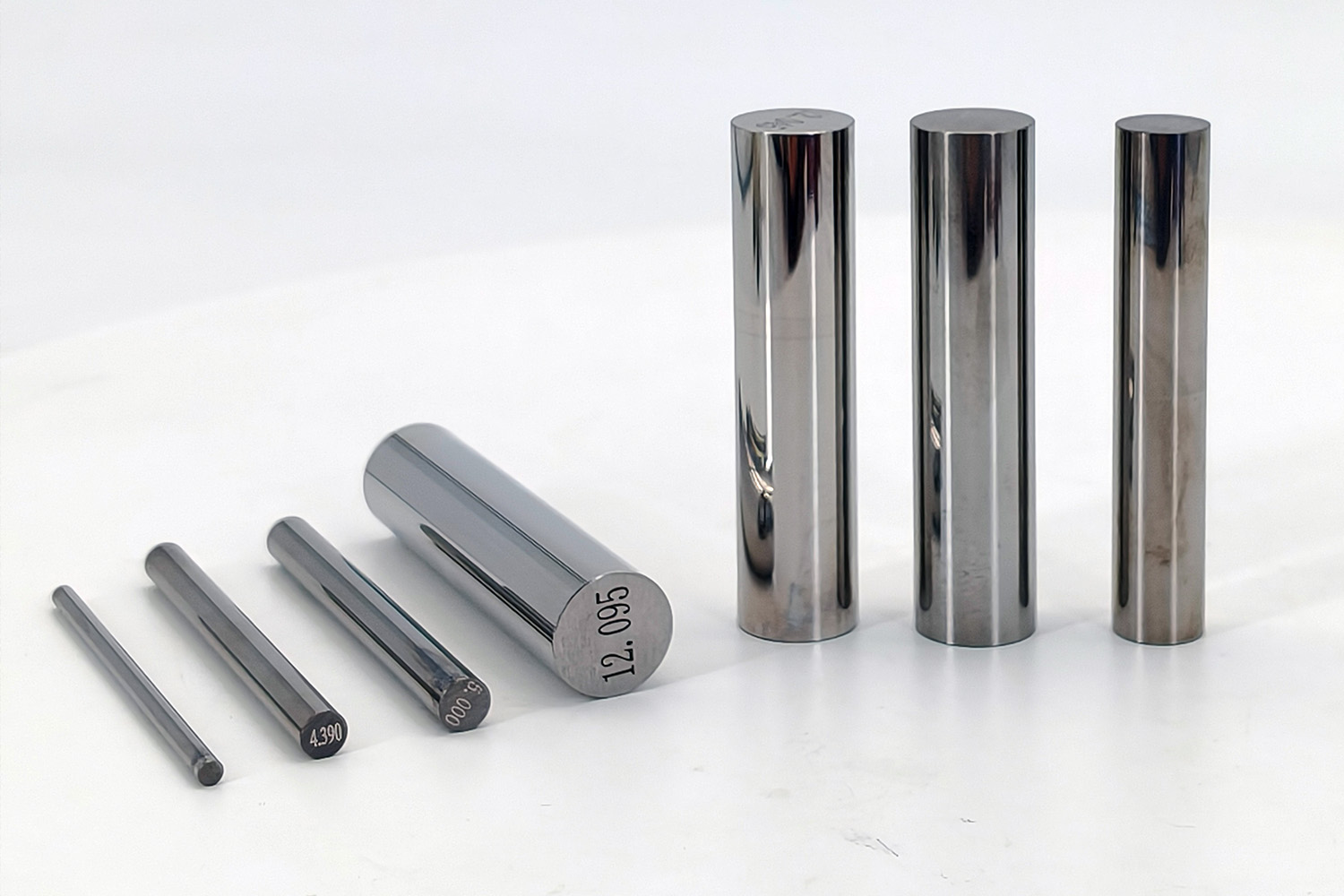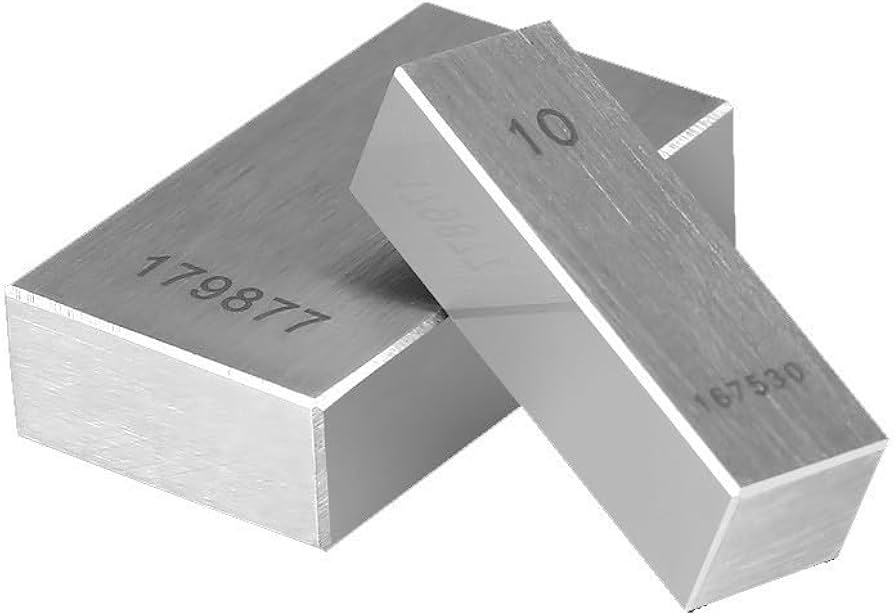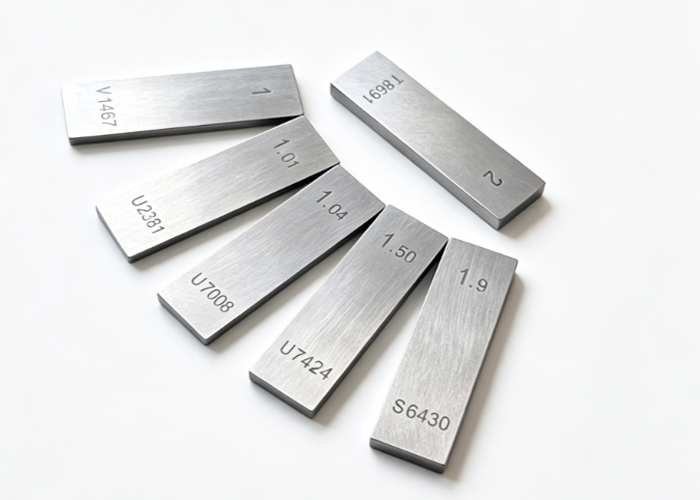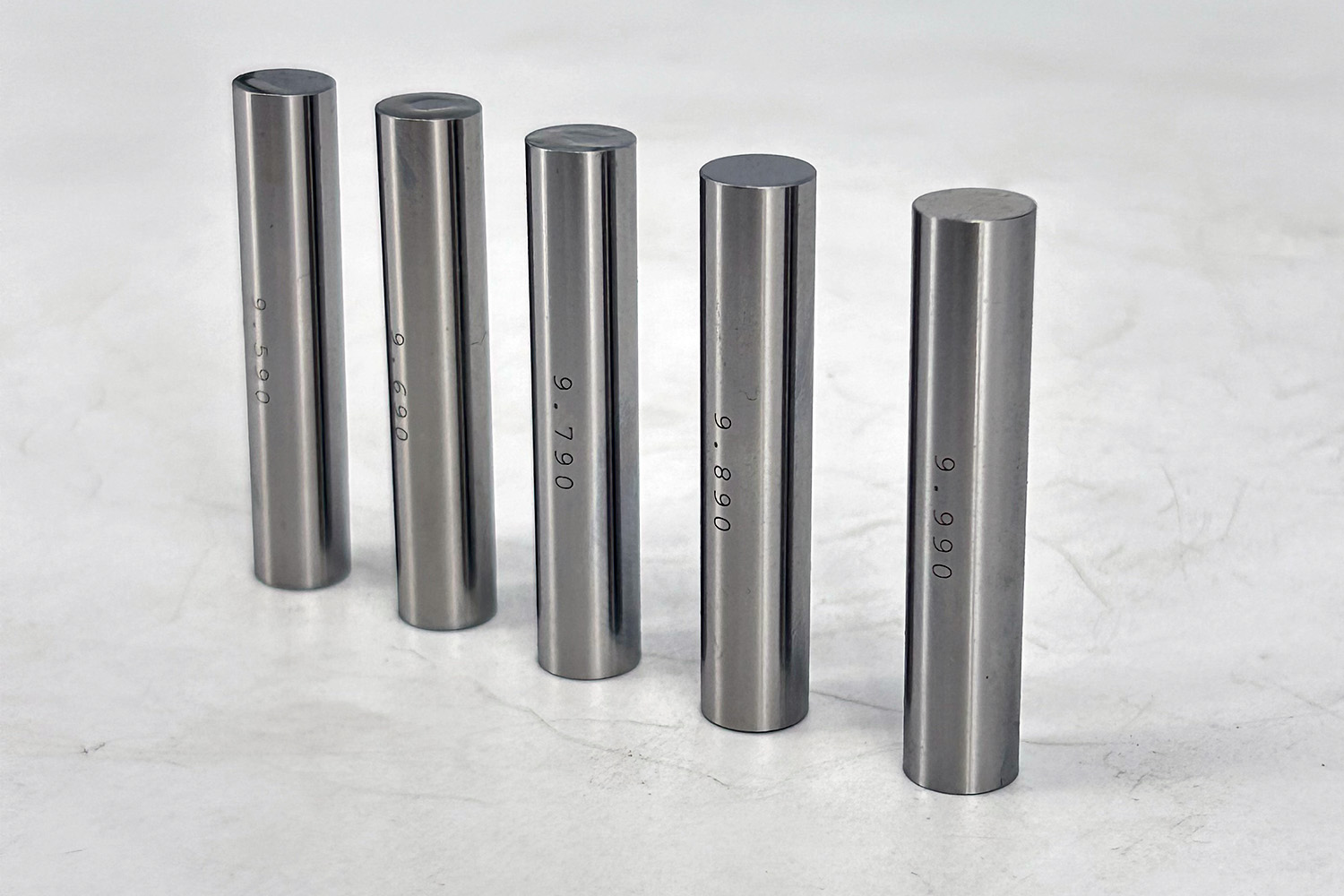
If two gauge blocks will not wring together reliably, the first suspects should usually be the measuring faces—not the operator’s hand strength.
Dust, residual oil, burrs, scratches, corrosion, excessive wringing fluid, and unstable temperature can all interfere with the extremely close contact required between gauge block surfaces.
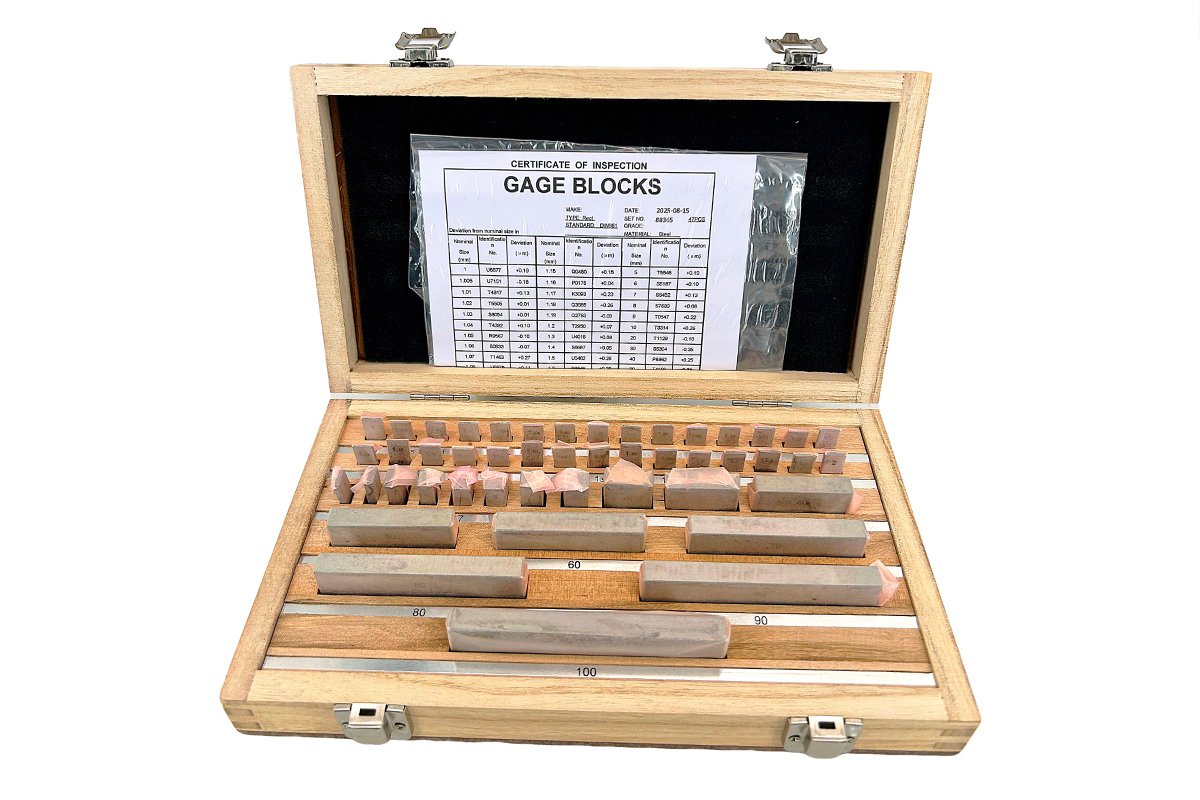
Gauge block wringing is the process of sliding extremely flat, clean measuring faces together until they form a stable, closely contacting assembly that behaves as a combined length standard.
A good wring should feel smooth and controlled. The blocks should remain joined without clamps, while the interface should not rock or contain obvious contamination.
Wringing is important because gauge blocks are frequently combined into stacks to create dimensions that are not available from a single block. If the interfaces are inconsistent, the reliability of the complete stack can suffer.
NIST’s gauge block handbook describes wringing as involving several physical effects rather than a simple vacuum between the surfaces. Fluid-film forces and limited real surface contact contribute to adhesion, while worn or scratched surfaces eventually become increasingly difficult to wring consistently.
For calibration rooms and manufacturing quality departments using precision gauge blocks, correct wringing technique is therefore part of the measurement process—not merely a convenient way to hold several blocks together.

Your Gauge Blocks Will Not Wring—Check These Five Things First
Before repeating the wringing motion again and again, diagnose the interface.
| Symptom | Likely Cause | What to Check |
| Blocks slide apart immediately | Contamination or excessive fluid | Clean both measuring faces |
| Blocks rock after joining | Burr, particle, or damaged surface | Inspect edges and gauging faces |
| One area sticks but another does not | Local scratch, burr, or poor surface condition | Check flatness and surface damage |
| Wring feels inconsistent each time | Dirt, wear, variable film thickness, handling | Reclean and inspect the blocks |
| Stack dimension seems unstable | Poor interfaces or thermal effects | Reduce handling and verify every wring |
This troubleshooting sequence matters because simply increasing pressure is not the correct response.
A gauge block that requires force to wring should be inspected for contamination or damage before more pressure is applied.
For precision work, NIST specifies that blocks should be clean and free from burrs, nicks, and corrosion before calibration or wringing. Dust or a burr between two surfaces can prevent full contact and produce an incorrect measurement condition.
Why Do Gauge Blocks Stick Together?
Gauge block wringing is often explained with one sentence:
“Gauge blocks stick because of molecular attraction.”
That explanation is convenient but incomplete.
Another common explanation is that air is squeezed out and atmospheric pressure creates a vacuum between the blocks. NIST notes that experimental work does not support vacuum as the primary explanation.
Instead, several effects can contribute simultaneously.
A Very Thin Fluid Film
Even an apparently dry surface can contain extremely small amounts of adsorbed moisture or other surface film.
When an appropriate microscopic wringing film exists between two extremely flat surfaces, internal cohesive forces within the film and surface tension can contribute to holding the blocks together.
The important word is microscopic.
The purpose is not to create a visible oil layer between the blocks.
Extremely Close Surface Contact
Gauge block measuring faces are manufactured to very high flatness and surface-finish requirements.
When two properly prepared faces are slid together, much of the intervening air and excess film is displaced, allowing the surfaces to approach each other extremely closely.
NIST also reports that limited direct contact occurs between wrung block surfaces, although this area is too small to describe the phenomenon as a large metallic bond.
Surface Condition Controls the Result
The wringing mechanism depends heavily on:
- Surface finish
- Flatness
- Cleanliness
- Wringing-film condition
- Wear
- Scratches
- Burrs
This explains why two new, clean blocks may wring easily while an old block of the same nominal size may feel inconsistent.
Good wringing depends more on surface condition and preparation than on applying greater force.
Before You Wring: Prepare the Measuring Faces
Most successful gauge block wringing starts before the blocks touch each other.
Clean Away Storage Protection
Steel gauge blocks may be stored with corrosion-protection oil or preservative.
Before measurement, this material must be removed from the measuring faces according to the block manufacturer’s recommended cleaning procedure.
NIST describes a cleaning process using suitable solvent followed by alcohol and lint-free wiping for its calibration procedures. It also emphasizes removing visible residue before measurement.
For routine industrial use, follow the chemical compatibility and cleaning recommendations supplied with your gauge block material.
Inspect for Dust and Fibers
A particle that is visually insignificant compared with the overall block can still be large compared with precision dimensional tolerances.
Check for:
- Dust
- Lint
- Metal particles
- Dried coolant
- Oil residue
- Finger contamination
Do not assume that a surface is clean simply because it looks shiny.
Check for Burrs and Nicks
A small raised burr can prevent the measuring faces from sitting together correctly.
NIST specifically warns that burrs and dust can prevent a block from wringing properly to a reference surface and produce false measurement results.
Damaged gauge blocks should be evaluated using an approved gauge-block maintenance procedure rather than aggressively polished by an operator without metrology training.
Allow Temperature to Stabilize
Gauge block length is referenced to standard dimensional conditions, with 20°C being the standard reference temperature for length.
More importantly for everyday use, the block and the item being measured should be allowed to reach suitable thermal equilibrium for the required accuracy.
Holding a block in warm hands for an extended period can introduce heat.
NIST notes that wringing itself can transfer heat from the technician’s hands and that thermal relaxation can influence the wrung interface over time. (NIST)
For high-precision work, handle blocks efficiently and use appropriate gloves, tongs, or other procedures where required.
How to Wring Gauge Blocks Correctly
There are different shop and laboratory procedures depending on block geometry, material, and application. The following method describes the practical principles rather than prescribing one universal laboratory procedure.
Step 1: Select the Required Blocks First
Calculate the required stack before repeatedly handling the set.
Suppose you need a target length that requires three blocks.
Remove those three blocks, verify their markings, and return unnecessary blocks to their case.
This reduces:
- Handling
- Contamination
- Temperature transfer
- Risk of dropping blocks
Step 2: Clean Both Wringing Faces
Clean the measuring faces immediately before wringing.
The surfaces should be free of visible dirt, fingerprints, excessive oil, and lint.
If a manufacturer-approved wringing fluid is used, only an extremely thin film is required.
NIST’s own platen preparation describes applying a thin, uniform film of light grease and polishing it until the film visually appears to be gone before wringing.
If you can clearly see a thick layer of oil between two gauge blocks, you are generally using far more fluid than the wringing interface requires.
Step 3: Bring the Faces Together at an Offset
Do not simply place one complete measuring face flat onto the other like stacking ordinary blocks.
Bring the surfaces into initial contact with the blocks offset so that only part of the faces overlap.
This helps the sliding action remove excess air and surface film rather than trapping them between the faces.
Step 4: Slide the Block Across the Surface
Move the upper block across the lower block using light, controlled pressure.
As the surfaces move into closer contact, resistance should increase.
NIST’s calibration procedure similarly describes carefully sliding the block onto the reference platen until wringing resistance is felt, then using slight downward pressure to work it into the final position. (NIST)
Step 5: Bring the Blocks Into Alignment
Continue the controlled sliding or rotational motion until the blocks are aligned.
Do not:
- Slam the blocks together
- Hammer them
- Use pliers
- Force a damaged surface across another block
- Grind the faces against each other
The motion should feel controlled rather than abrasive.
Step 6: Check the Wring
Once aligned, confirm that:
- The blocks remain attached
- There is no rocking
- The interface feels stable
- No visible particle appears trapped between the faces
- The blocks do not immediately separate under normal handling
If the wring feels suspicious, separate the blocks, clean them, and start again.
Do not compensate for an uncertain interface by adding more pressure.
Mistake #1: Using Too Much Wringing Oil
More oil does not create a more accurate wring.
Excess fluid increases the amount of material between the gauging faces and makes the interface less controlled.
This mistake often happens when an operator assumes that oil acts like an adhesive.
It does not.
The purpose of a wringing film is to support extremely close, repeatable surface contact—not to form a thick lubricating layer.
Better Practice
Use only the amount recommended for your gauge block material and procedure.
The practical appearance should generally be much closer to “almost dry” than “wet.”
Mistake #2: Wringing Without Cleaning Again
A block may have been cleaned when it was removed from storage, but that does not guarantee that its wringing face is still clean after:
- Handling
- Setting it on a bench
- Measuring another component
- Contact with packaging
- Exposure to airborne dust
NIST specifically recommends recleaning before introducing the wringing film when blocks are to be wrung, helping prevent foreign substances from damaging the contact faces.
Better Practice
Treat “ready for storage” and “ready for wringing” as two different cleanliness levels.
Recheck the actual gauging surfaces immediately before making a precision stack.
Mistake #3: Trying to Wring Through a Burr
A burr does not disappear because the blocks are pressed harder.
Instead, the burr can:
- Hold the surfaces apart
- Scratch the mating block
- Produce unstable contact
- Damage an otherwise good measuring face
If a block repeatedly refuses to wring after proper cleaning, stop and inspect it.
NIST notes that worn and scratched gauge blocks eventually develop increasingly erratic wringing behavior and may need to be removed from service.
Mistake #4: Treating Strong Adhesion as Proof of Accuracy
A block that sticks firmly is not automatically a perfect block.
Wringing strength alone cannot verify:
- Calibration
- Length deviation
- Parallelism
- Flatness
- Wear
- Long-term dimensional stability
A block can still require calibration even if it wrings successfully.
Wringability is an important condition of a gauge block, but it is not a substitute for dimensional calibration.
This distinction matters when purchasing gauge block sets for calibration: material, grade, inspection documentation, and calibration requirements should be evaluated alongside wringing performance.
Mistake #5: Building a Stack With More Blocks Than Necessary
Every additional block creates another interface.
Suppose the same target dimension can be produced using either:
- Three gauge blocks
- Six gauge blocks
The three-block combination is generally preferable when suitable blocks are available.
Why?
Because fewer blocks mean:
- Fewer wringing operations
- Fewer interfaces
- Less handling
- Less opportunity for contamination
- Faster setup
Gauge blocks are designed so that wrung combinations can create highly accurate composite lengths, but unnecessary stack complexity adds opportunities for operational error.
A Practical Stack-Building Rule
Use the smallest practical number of blocks that produces the required dimension while respecting the available set and required accuracy.
Do not deliberately create a large “tower” simply because more combinations are possible.
Mistake #6: Ignoring Hand Heat
Gauge blocks are precision length standards, not ordinary workshop spacers.
Holding a small steel block tightly for an extended period transfers heat from the operator to the block.
The dimensional significance depends on:
- Block length
- Material
- Temperature difference
- Required measurement uncertainty
For ordinary workshop checks, the effect may not dominate the measurement.
For high-precision calibration, it can matter considerably.
Better Practice
Prepare the stack efficiently.
Avoid unnecessary handling and allow suitable thermal stabilization before high-accuracy measurement.
Mistake #7: Leaving Contaminated Blocks Wringed After Use
After the measurement is complete, the job is not finished.
Gauge block maintenance should include:
- Separating the stack carefully.
- Inspecting the faces.
- Cleaning away wringing fluid and contamination.
- Drying the blocks according to the approved procedure.
- Applying corrosion protection where required.
- Returning each block to the correct position in its case.
Steel blocks deserve particular attention because moisture and contaminants can promote corrosion.
NIST recommends suitable protective coating for steel gauge blocks when they are not in daily use and emphasizes clean storage conditions.
When Poor Wringing Is Telling You to Retire a Block
Repeated wringing failure can be a useful warning sign.
Consider removing a block from normal service and having it evaluated if:
- It consistently will not wring after proper cleaning
- Visible scratches cross the measuring face
- Burrs repeatedly interfere with contact
- Corrosion is visible on the gauging surface
- The block rocks against a known good surface
- Calibration results show unacceptable dimensional change
- Wringing behavior becomes unpredictable compared with other blocks
NIST’s long-term work on gauge blocks notes that increasingly worn and scratched surfaces cause wringing to become more erratic until the blocks no longer wring satisfactorily.
Trying to “make it work one more time” may cost more than removing a questionable block from service.
Steel, Ceramic, or Tungsten Carbide: Does Material Change Wringing?
Wringing is not limited to one gauge block material.
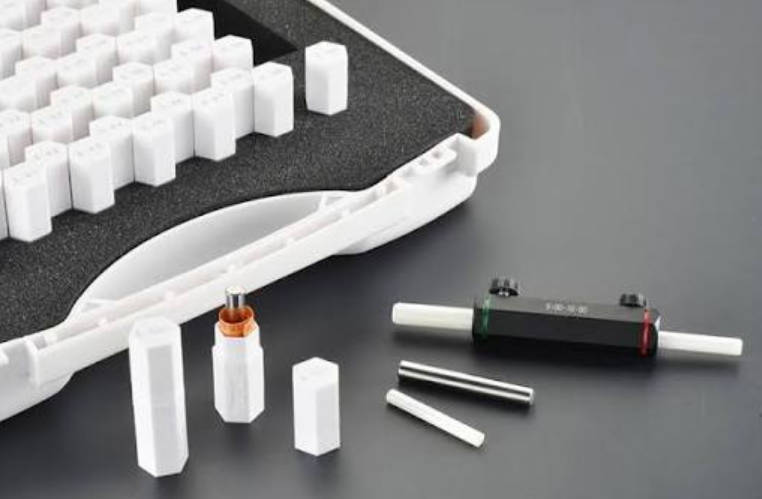
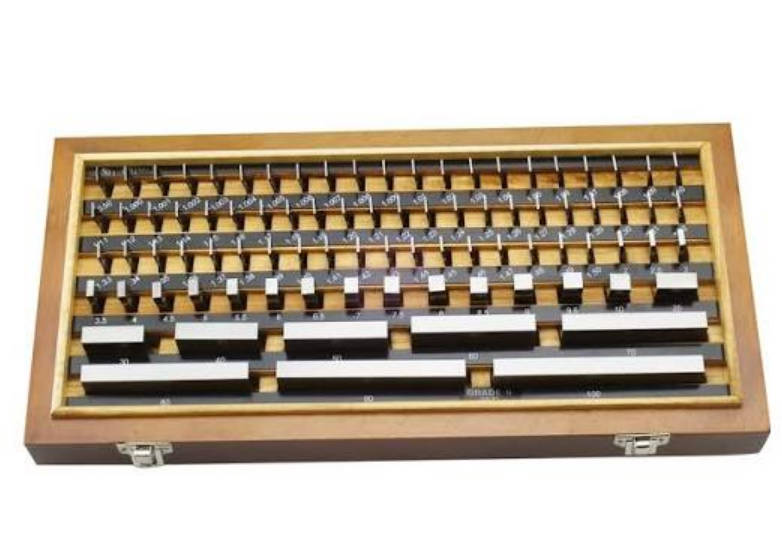
MISHUTE supplies precision gauge block sets in zirconia ceramic, tungsten carbide, and hardened steel configurations. (mishute.com)
However, material influences how the blocks behave in storage and service.
| Material | Practical Consideration |
| Hardened steel | Familiar general-purpose option; requires appropriate corrosion protection |
| Zirconia ceramic | Strong corrosion resistance and useful where rust prevention is a concern |
| Tungsten carbide | High wear resistance for demanding use |
Material should not be selected solely on wringability.
Also consider:
- Inspection frequency
- Wear
- Corrosion exposure
- Thermal behavior
- Handling environment
- Required grade
- Calibration strategy
- Purchase budget
A high-quality block still requires clean, flat measuring faces regardless of whether it is steel, ceramic, or carbide.
How Gauge Block Wringing Affects Purchasing Decisions
Buyers often focus primarily on:
- Number of blocks in the set
- Metric or inch sizes
- Price
For professional metrology use, the purchasing specification should go further.
Define the Grade
The required gauge block grade should reflect how the blocks will be used.
A calibration laboratory, inspection room, and general machine shop may not require the same grade.
Do not automatically specify the tightest available grade when the measurement system cannot benefit from it.
Choose the Material
Consider whether your main concern is:
- General-purpose cost
- Wear
- Corrosion
- Long-term use
- Workshop conditions
MISHUTE’s gauge block solutions include steel, ceramic, and tungsten carbide options for different measurement environments.
Review the Set Composition
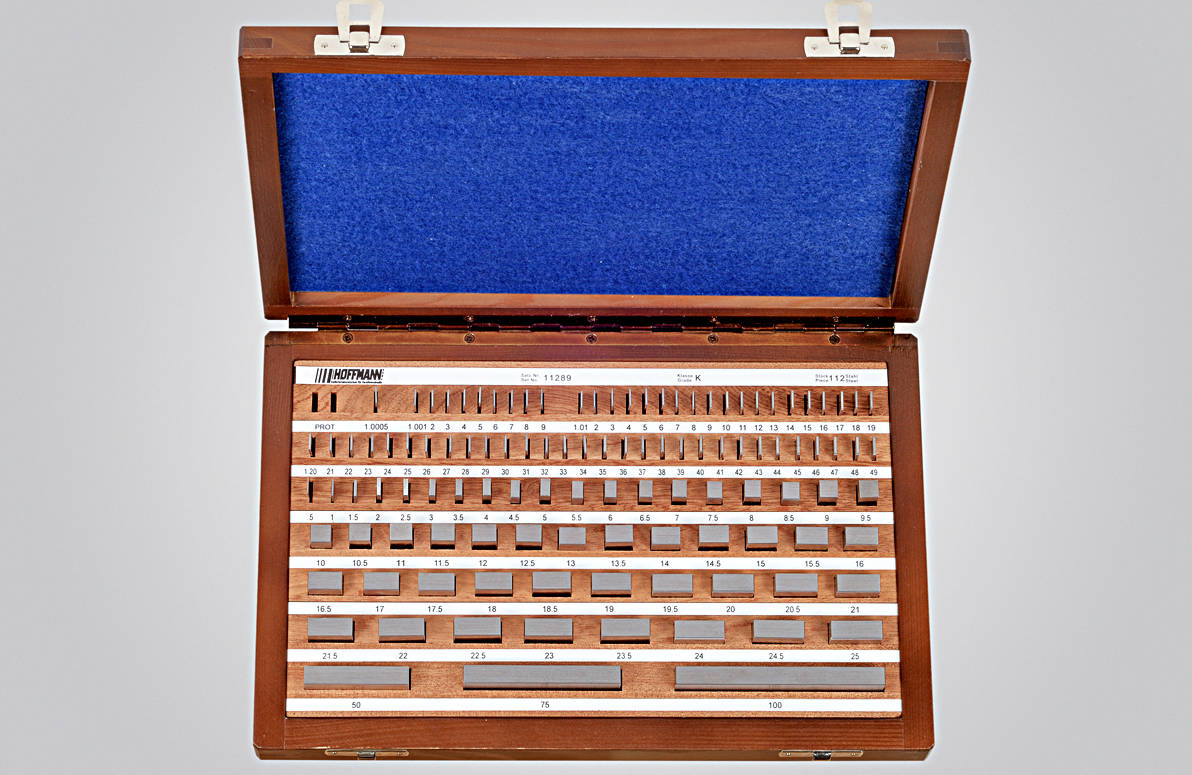
The number and progression of blocks determine how efficiently common target lengths can be built.
For production use, review the dimensions you actually need to generate.
An appropriate set can reduce the number of blocks required in frequently used combinations.
Ask About Inspection Documentation
Depending on your quality system, specify whether you need:
- Factory inspection report
- Calibration certificate
- Traceability information
- Third-party calibration
- Individual block data
Do not assume every quotation includes the same documentation.
Consider Wringability as a Functional Requirement
Flatness, parallelism, surface quality, and face condition all affect practical gauge block use.
If blocks cannot develop reliable wrung interfaces, building precise combinations becomes difficult regardless of the nominal size marked on the block.
A Better Daily Gauge Block Routine
Instead of treating gauge block care as an occasional maintenance task, integrate it into every use cycle.
Before Measurement
- Confirm the required combination.
- Remove only the required blocks.
- Check identification and condition.
- Clean the measuring faces.
- Inspect for burrs and contamination.
- Allow appropriate temperature stabilization.
During Measurement
- Wring with light controlled motion.
- Minimize the number of blocks in the stack.
- Avoid unnecessary hand contact.
- Keep the stack away from chips, coolant, and dirty surfaces.
After Measurement
- Separate the blocks carefully.
- Clean both gauging faces.
- Inspect for new damage.
- Protect steel blocks against corrosion as required.
- Return each block to its designated case position.
This routine protects both measurement confidence and the investment made in the gauge block set.
Frequently Asked Questions
What is gauge block wringing?
Gauge block wringing is the process of bringing two extremely flat, clean measuring faces into very close contact through a sliding motion so that they adhere and function as a combined length standard.
Why do gauge blocks stick together?
Gauge block adhesion involves several surface effects, including forces associated with a very thin fluid film, surface tension, and limited direct surface contact. It should not be explained simply as a vacuum between the blocks.
How do you wring gauge blocks correctly?
Clean and inspect the measuring faces, apply only the appropriate microscopic wringing film where required, bring the faces together in an offset position, and use a controlled sliding motion until resistance develops and the blocks align.
Do gauge blocks need oil to wring?
The procedure depends on the block material and manufacturer’s instructions. Where a wringing fluid is used, only a very thin film is required. A visibly thick oil layer is undesirable.
Why won’t my gauge blocks wring together?
Common causes include dirt, excessive oil, burrs, scratches, corrosion, damaged measuring faces, or improper preparation. Repeated failure after cleaning can indicate that the block requires inspection or removal from service.
Can scratched gauge blocks still be used?
Minor damage should be evaluated according to your metrology procedure. Scratches and burrs can interfere with wringing, and severely worn blocks may no longer provide reliable measuring surfaces.
How many gauge blocks should be used in a stack?
Use the smallest practical number of blocks needed to generate the required dimension. Fewer interfaces reduce handling and the opportunity for contamination or wringing errors.
Does wringing add length to a gauge block stack?
Gauge block length standards account for the wringing interface in their defined measurement system. In practical use, good surface condition and consistent wringing remain important for obtaining reliable stacked dimensions.
Should gauge blocks be left wrung together?
Gauge blocks should normally be separated after the measurement task unless a controlled metrology procedure specifically requires otherwise. Clean and protect them before returning them to storage.
How should steel gauge blocks be stored?
Steel blocks should be stored clean and protected from moisture and corrosion. When not in regular use, an appropriate manufacturer-recommended corrosion preventive should be applied.
Can ceramic gauge blocks be wrung?
Yes. Properly manufactured ceramic gauge blocks can be wrung for dimensional combinations. The same fundamental requirements for clean, high-quality measuring faces still apply.
Conclusion
Reliable gauge block wringing begins with the condition of the measuring faces.
The operator’s goal is not to make the blocks stick as strongly as possible. It is to create a clean, repeatable, closely contacting interface without introducing contamination, excessive fluid, burrs, or unnecessary heat.
Clean first, inspect for damage, use only the required wringing film, slide the faces together with controlled pressure, and never use force to compensate for a poor surface.
When wringing becomes inconsistent after correct cleaning and handling, treat that behavior as a possible condition problem rather than merely an operator inconvenience.
For calibration laboratories, inspection rooms, and precision manufacturing applications, MISHUTE offers gauge blocks for precision measurement in different materials and set configurations, with options for application-specific measurement requirements.