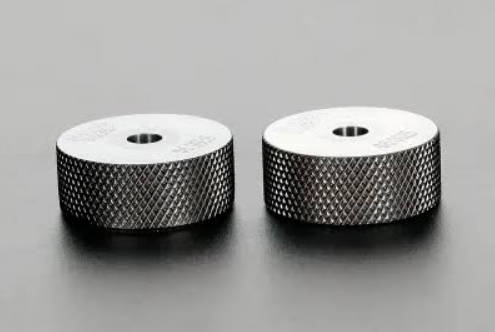
Two pipe threads may have the same nominal pipe size and a very similar 60-degree thread form, yet require completely different gauges.
That is exactly what can happen with NPSM and NPT.
NPSM is a straight mechanical pipe thread, while NPT is a tapered pipe thread. The correct inspection gauge must match that geometry.
For a buyer or quality engineer, this is more important than simply remembering what the abbreviations mean.
If the component drawing calls for NPSM, an NPT taper gauge should not be substituted just because the nominal pipe size and thread pitch appear familiar.
Likewise, an NPSM straight-thread gauge is not the correct tool for verifying an NPT taper thread.
The practical selection question is:
Does the connection depend on a straight mechanical thread, or on tapered thread engagement?
Once that is clear, the correct gauge family becomes much easier to identify.
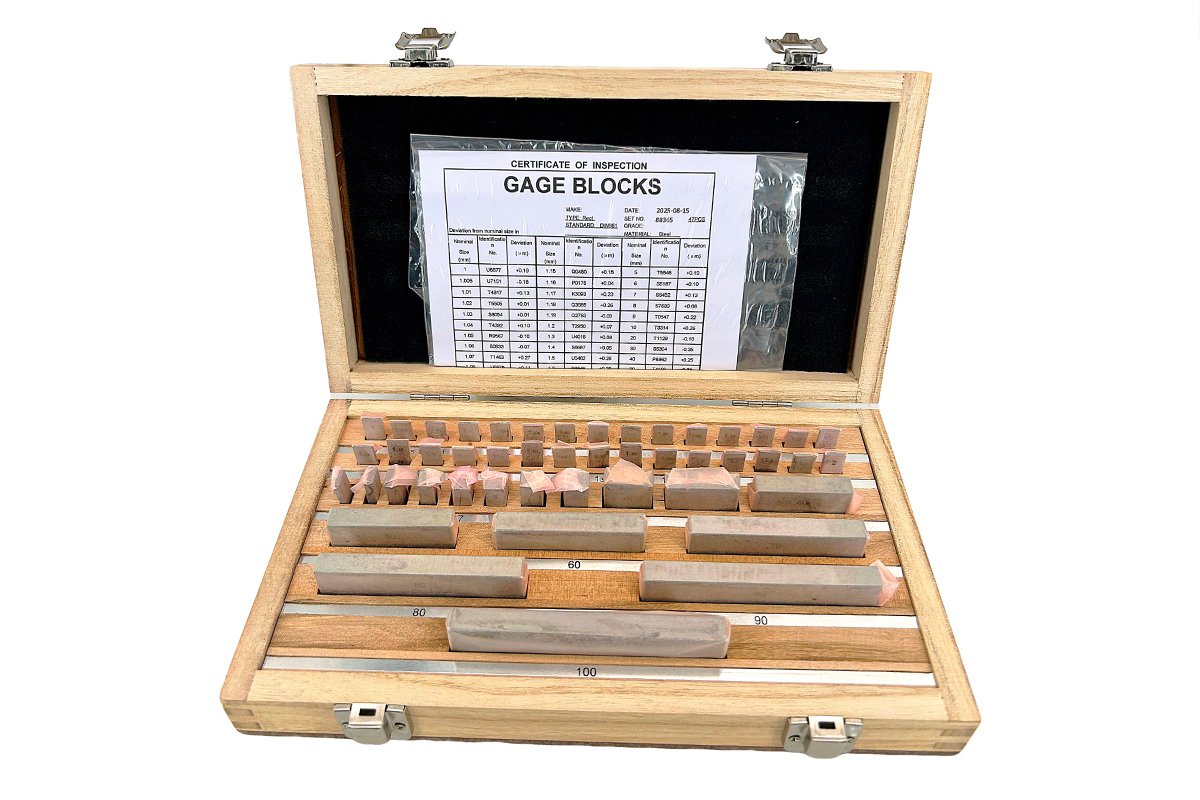
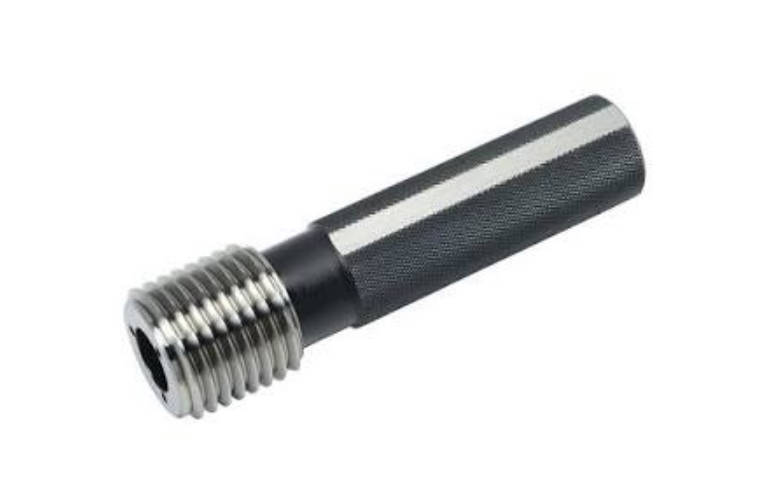
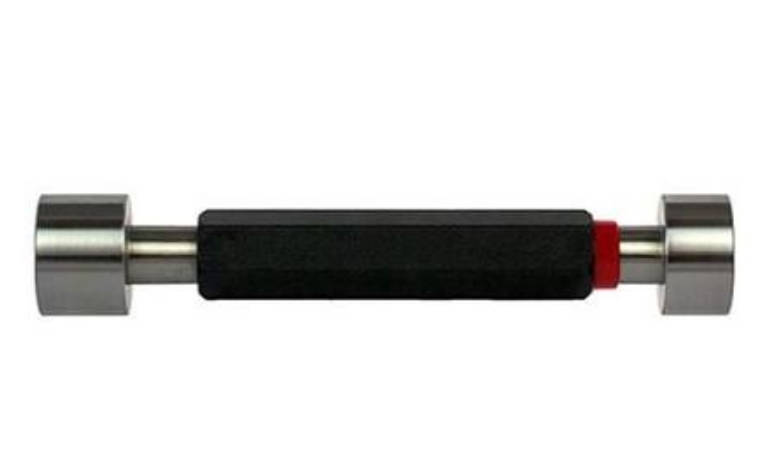
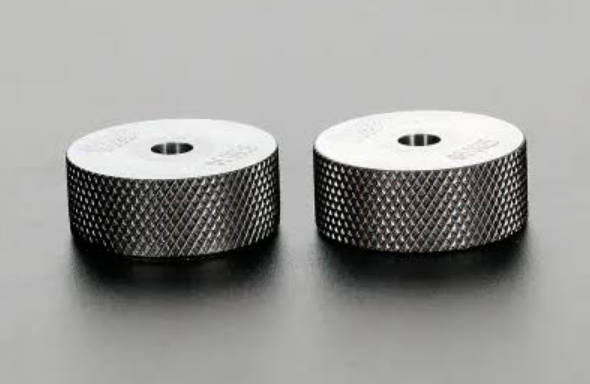
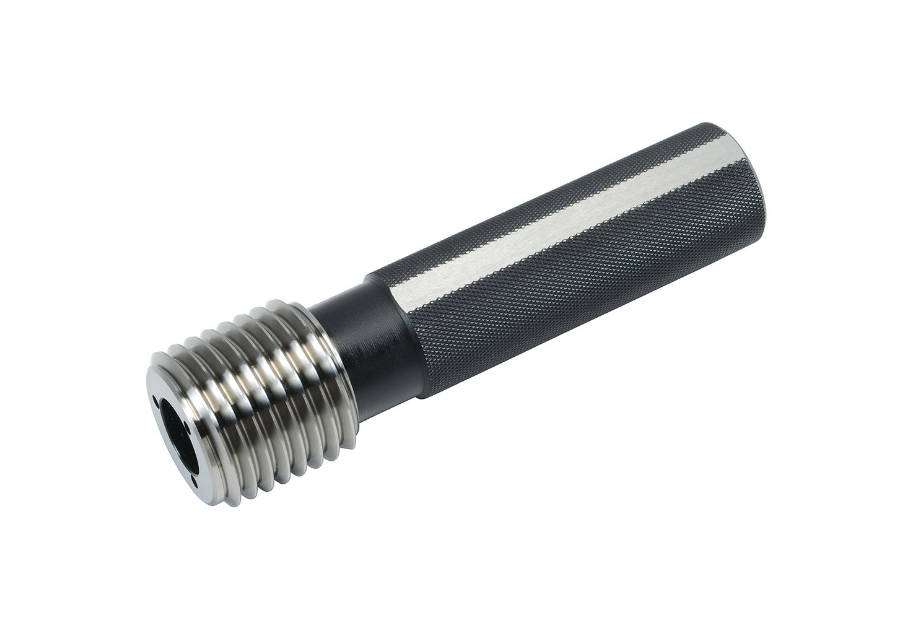
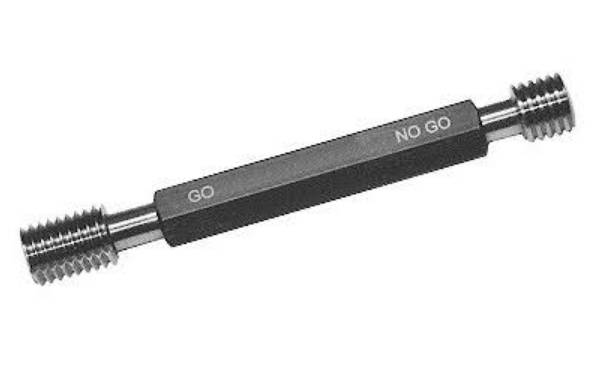
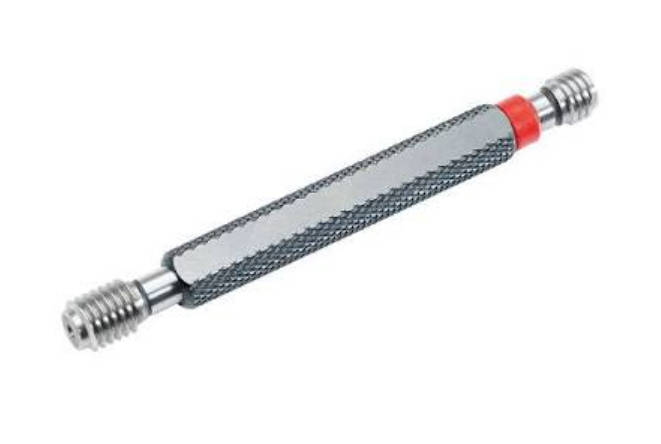
For manufacturers inspecting American pipe threads, MISHUTE supplies NPSM thread gauges for straight pipe thread inspection together with other precision thread gauge configurations for internal and external threads.
Start With the Joint, Not the Gauge
Imagine two threaded components on a production table.
Both are identified by a nominal pipe size.
Both may have a similar-looking thread pitch.
But the assemblies are intended to work differently.
Connection A: The Thread Tightens Progressively
As the male and female parts engage, the tapered geometry creates increasing interference.
This points toward an NPT-type application.
Connection B: The Threads Remain Parallel
The thread primarily provides mechanical engagement, while sealing—if required by the assembly—is handled by another feature or sealing method.
This points toward NPSM.
That functional difference is the fastest way to understand why the gauges differ.
NPT inspection is concerned with a tapered thread system. NPSM inspection is concerned with a straight, parallel thread system used for mechanical joints.
NPSM vs NPT at a Glance
| Feature | NPSM | NPT |
| Full name | National Pipe Straight Mechanical | National Pipe Taper |
| Thread geometry | Straight / parallel | Tapered |
| Main joint role | Mechanical connection | Tapered pipe connection |
| Thread angle | 60° family | 60° family |
| Diameter along thread length | Essentially parallel | Changes along taper |
| Typical internal inspection | NPSM plug gauge | NPT taper plug gauge |
| Typical external inspection | NPSM ring gauge | NPT taper ring gauge |
| Gauge interchangeability | No | No |
| Key inspection concern | Straight-thread limits and fit | Tapered engagement and thread position |
This is the first distinction procurement teams should make.
Do not begin with:
We need a 1/2-inch pipe thread gauge.
Begin with:
We need a 1/2-inch NPSM internal thread gauge.
or:
We need an NPT external thread gauge.
Why NPSM Is Called a Straight Mechanical Thread
The letters help explain the intended function:
NPSM = National Pipe Straight Mechanical
The word Straight matters.
Unlike a tapered pipe thread, the thread does not intentionally increase or decrease in diameter along its axis as part of the thread form.
The word Mechanical matters too.
NPSM is associated with free-fitting mechanical joints rather than relying on tapered thread interference as the fundamental connection principle.
That makes straight pipe thread gauges useful for components such as mechanical pipe connections, fittings, adapters and threaded parts where an NPSM specification appears on the drawing.
Why NPT Uses a Different Gauge Concept
NPT contains a taper.
That changes the meaning of thread engagement.
With a straight thread, the gauge is dealing with a substantially cylindrical thread envelope.
With a tapered thread, the effective thread diameter changes along the axis.
Therefore, the inspector is not simply asking:
Does this fixed straight-thread diameter fit?
The axial position at which the taper gauge engages becomes part of the inspection logic.
That is why NPT gauges commonly use taper-specific plug and ring gauge designs.
A straight NPSM gauge and a tapered NPT gauge may share a nominal pipe-size designation, but they represent different thread envelopes.
The Most Dangerous Shortcut: “The TPI Is the Same, So the Gauge Should Work”
This is a common mistake.
Certain NPSM and NPT sizes may use the same nominal pipe-size family and the same threads-per-inch value.
That does not make the threads identical.
Imagine two gauges with the same:
- Nominal pipe size
- TPI
- General 60° thread family
but one is cylindrical and the other tapered.
Their functional geometry is still different.
The gauge must verify the actual thread specification—not merely count thread pitches.
So this purchasing logic is wrong:
Same size + same TPI = interchangeable gauge.
A better rule is:
Thread designation + size + TPI + internal/external function must all match before the gauge is selected.
Scenario 1: The Drawing Says 1/2-14 NPSM
The purchasing team sees:
- 1/2
- 14 TPI
- Pipe thread
Someone in the toolroom already has a 1/2-14 NPT gauge.
Can they use it?
No.
The missing piece is the thread designation.
The component requires a straight NPSM thread.
The NPT gauge represents a tapered NPT thread.
The similar size designation does not override the geometric difference.
For an internal NPSM thread, the inspection requirement should point toward an appropriate NPSM thread plug gauge.
For an external NPSM thread, use the corresponding NPSM ring gauge specification.
Scenario 2: The Component Must Make an NPT Pipe Connection
Now the drawing explicitly calls out NPT.
In this case, replacing the taper gauge with an NPSM straight gauge would create the opposite error.
An NPSM gauge cannot correctly represent:
- NPT taper
- NPT engagement relationship
- The applicable tapered thread envelope
Even if it begins to engage the thread, that partial fit does not prove conformity.
A gauge starting to screw onto a thread is not evidence that it is the correct gauge standard.
This rule is particularly useful when operators handle several American pipe-thread types in the same inspection room.
Internal or External Thread Comes Next
Once the drawing confirms NPSM, the next question is simple:
Is the workpiece thread inside a hole or on the outside of a fitting?
Internal NPSM Thread
Use an NPSM thread plug gauge.
Common components may include:
- Internally threaded fittings
- Housings
- Adapters
- Mechanical connectors
External NPSM Thread
Use an NPSM thread ring gauge.
Examples include:
- Male fittings
- External threaded adapters
- Pipe-type mechanical components
| Workpiece | Correct Gauge Family |
| Internal NPSM thread | NPSM thread plug gauge |
| External NPSM thread | NPSM thread ring gauge |
| Internal NPT thread | NPT taper plug gauge |
| External NPT thread | NPT taper ring gauge |
This simple table can prevent a surprising number of RFQ errors.
NPSM Gauging Is Closer to Conventional Straight Thread Inspection
Because the thread is straight, NPSM inspection is conceptually closer to other cylindrical thread limit-gauging systems than NPT taper inspection is.
Production gauges can be configured around:
- GO limits
- NO-GO limits
- Internal threads
- External threads
- Applicable thread class
- Nominal pipe size and TPI
The GO member verifies the functional acceptance side of the thread.
The NO-GO member controls the opposing limit according to the applicable inspection requirement.
For production applications, precision NPSM thread gauges can therefore provide a repeatable fixed-limit inspection method for both male and female mechanical pipe threads.
Do Not Confuse “Straight” With “Loose” or “Low Precision”
Another misconception is that because NPSM is described as a free-fitting mechanical thread, inspection accuracy is unimportant.
That is incorrect.
The thread still needs controlled:
- Pitch diameter
- Thread form
- Pitch
- Major/minor diameter relationship
- Functional fit
A poorly manufactured straight thread can still cause:
- Difficult assembly
- Excessive play
- Cross-threading
- Poor alignment
- Inconsistent mechanical fit
The difference from NPT is the thread system and intended joint behavior—not an absence of dimensional requirements.
What Happens If an NPSM Thread Is Mistaken for NPT?
This mistake can create several problems.
False Rejection
A correctly manufactured NPSM component may fail an NPT gauge because the taper geometry does not correspond.
Incorrect Process Adjustment
Production personnel may start changing:
- Thread cutting depth
- Tool offsets
- Thread pitch diameter
- CNC program parameters
even though the component itself was correct.
Gauge or Part Damage
Forcing an incompatible thread gauge can damage the thread flanks of either the gauge or workpiece.
Assembly Confusion
A component may appear to start mating but behave incorrectly deeper into engagement.
The correct response is always to verify the drawing designation before adjusting production.
The Seal Question Is Another Useful Clue
The intended sealing method often helps explain which pipe thread is involved.
NPT
The tapered geometry contributes directly to the threaded joint engagement. In many applications, suitable sealing material is also used according to the connection design.
NPSM
The straight mechanical thread is not intended to achieve sealing simply through tapered thread interference.
If sealing is required, the connection design may rely on another sealing element or surface.
This is useful when reviewing an unfamiliar assembly.
But the final authority should still be the engineering drawing.
Do not identify a thread only from how the fitting looks after assembly.
NPSM and NPT Can Look Similar on the Inspection Bench
For short threaded sections, taper can be difficult to identify visually.
That means the operator should not rely on:
- Eye inspection
- Approximate outside diameter
- “It screws in a few turns”
- Similar TPI
Instead, verify:
- Drawing designation
- Nominal pipe size
- Threads per inch
- Straight or taper thread
- Internal or external thread
- Required gauge type
This six-point identification sequence makes pipe-thread inspection much safer.
The Gauge Marking Should Be Read Before Every Check
In an inspection department using multiple pipe-thread standards, the gauge marking matters.
A well-controlled gauge system should make it easy to distinguish:
- NPSM
- NPT
- Nominal size
- TPI
- Plug or ring
- GO / NO-GO or applicable taper gauge function
- Gauge ID
An operator should never select a gauge based only on its physical diameter.
A 1/2-inch-looking gauge does not tell you the thread standard by itself.
NPSM Plug Gauge vs NPSM Ring Gauge
Within the NPSM family, buyers still need to choose the correct gauge form.
NPSM Plug Gauge
Designed for internal NPSM threads.
Use it when checking a female mechanical pipe thread.
NPSM Ring Gauge
Designed for external NPSM threads.
Use it for a male threaded feature.
This distinction is particularly important when purchasing NPSM pipe thread inspection gauges for a complete mating assembly.
If the company manufactures both the male and female components, it may need both plug and ring gauges.
NPT Gauging Should Not Be Simplified Into Ordinary GO/NO-GO Logic
For straight thread gauges, buyers are often familiar with:
GO passes, NO-GO does not.
NPT taper gauging introduces an additional consideration: axial engagement and the relationship of the tapered thread to the gauge reference position.
Therefore, inspectors should not assume that an NPT taper gauge is simply a normal straight plug gauge with a different label.
The inspection procedure should correspond to the specific NPT gauge system being used.
This is one reason NPT and NPSM gauge training should remain separate in the quality department.
Which One Should a Mechanical Fitting Manufacturer Buy?
Use the component drawing—not the product name “pipe fitting”—to make the decision.
Drawing Specifies NPSM
Purchase NPSM straight thread gauges.
Drawing Specifies NPT
Purchase NPT taper thread gauges.
Factory Produces Both
Maintain separate clearly identified gauge systems.
Drawing Is Missing the Thread Designation
Do not guess from diameter and TPI.
Ask engineering or the customer to confirm the intended pipe-thread standard.
The cost of one clarification is usually much lower than machining a production batch to the wrong pipe-thread specification.
What Should an NPSM Gauge RFQ Include?
A useful NPSM inquiry should contain more than:
Need NPSM gauge.
Provide:
| RFQ Field | Information to Provide |
| Thread standard | NPSM |
| Nominal pipe size | e.g. drawing specification |
| TPI | Threads per inch |
| Workpiece thread | Internal / External |
| Gauge type | Plug / Ring |
| Gauge function | GO/NO-GO as required |
| Thread class | Drawing requirement |
| Material | According to inspection conditions |
| Quantity | Individual gauges or sets |
| Production volume | Sampling / frequent / high-volume |
| Documentation | Inspection or calibration requirement |
| Drawing | Recommended for custom requirements |
For non-standard or customer-specific applications, custom NPSM thread gauges can be specified from the complete engineering drawing rather than from nominal pipe size alone.
What Should an NPT Gauge RFQ Include?
The purchasing information is similar at the beginning:
- NPT designation
- Nominal pipe size
- TPI
- Internal or external thread
- Required gauge type
- Quantity
- Documentation requirements
But because the thread is tapered, the actual gauge specification and inspection method must correspond to the NPT system rather than an NPSM straight-thread limit gauge.
This is why combining both into one generic line such as:
Pipe thread gauge, 1/2 inch
is poor procurement practice.
A Better Way to Organize a Pipe Thread Gauge Cabinet
If a factory regularly manufactures multiple pipe thread types, organize gauges by thread standard first, not size first.
For example:
NPT
- 1/8
- 1/4
- 3/8
- 1/2
NPSM
- 1/8
- 1/4
- 3/8
- 1/2
This reduces the risk that an operator sees the same nominal size and selects the wrong standard.
Clear labels and storage locations are a simple but effective quality-control measure.
Three Questions That Identify the Correct Gauge Quickly
When an unfamiliar drawing reaches inspection, ask these questions in order.
1. Does the Drawing Say NPSM or NPT?
This identifies the thread family.
2. Is the Thread Internal or External?
This determines plug vs ring.
3. What Are the Nominal Size and TPI?
These identify the required size within the selected family.
Only after these three questions should the gauge be removed from storage.
Common NPSM vs NPT Inspection Mistakes
Mistake 1: Selecting by TPI Alone
Same or similar pitch does not mean the thread profiles are interchangeable.
Mistake 2: Ignoring Straight vs Taper Geometry
This is the fundamental distinction between the two gauge systems.
Mistake 3: Trying an Available NPT Gauge on an NPSM Part
Physical engagement does not prove correct inspection.
Mistake 4: Ordering “Pipe Thread Gauge” Without a Standard
The RFQ should explicitly say NPSM or NPT.
Mistake 5: Forgetting Internal vs External Thread
The supplier still needs to know plug or ring gauge.
Mistake 6: Forcing a Gauge That Does Not Engage Normally
Stop and verify:
- Gauge standard
- Gauge size
- Workpiece marking
- Drawing revision
- Thread condition
before changing production.
Frequently Asked Questions
What does NPSM mean?
NPSM stands for National Pipe Straight Mechanical. It is a straight pipe-thread form intended for mechanical joint applications.
What is the main difference between NPSM and NPT?
NPSM is a straight or parallel pipe thread, while NPT is tapered. This geometric difference means their inspection gauges are not interchangeable.
Can an NPT gauge check an NPSM thread?
No. An NPT gauge represents a tapered thread system, while an NPSM gauge represents a straight mechanical pipe thread.
Are NPSM and NPT threads the same angle?
They belong to the same general 60-degree American pipe-thread family, but their straight-versus-tapered geometry and dimensional requirements differ.
What gauge is used for an internal NPSM thread?
An NPSM thread plug gauge is used to inspect internal NPSM threads.
What gauge checks an external NPSM thread?
An NPSM thread ring gauge is used for external straight mechanical pipe threads.
Is NPSM a sealing pipe thread?
NPSM is primarily intended for mechanical straight-thread joints. If the assembly requires sealing, the joint design generally uses an appropriate sealing arrangement rather than relying on tapered thread interference.
Why can NPSM and NPT be confused?
They may share familiar nominal pipe-size and TPI conventions, and their thread forms can look similar visually. The most important distinction is that NPSM is straight while NPT is tapered.
Can NPSM gauges be used as GO/NO-GO gauges?
Yes. Straight NPSM internal and external threads can be inspected using appropriate limit-gauge configurations according to the specified thread requirements.
What information should I provide when ordering NPSM thread gauges?
Provide the NPSM designation, nominal pipe size, TPI, internal or external thread, plug or ring requirement, thread class, quantity and documentation needs.
Should I send a drawing for custom NPSM gauges?
Yes, especially if the component has a non-standard thread, special tolerance, unusual geometry, or customer-specific inspection requirement.
Conclusion: Straight or Tapered Comes Before Size
When choosing between NPSM and NPT thread gauges, do not begin with the nominal pipe size.
Begin with the thread geometry.
NPSM is a straight mechanical pipe thread. NPT is a tapered pipe thread. That difference determines the gauge system.
Then confirm:
- NPSM or NPT
- Nominal pipe size
- TPI
- Internal or external thread
- Plug or ring gauge
- Thread class
- Inspection and certificate requirements
The safest rule is simple:
Use an NPSM gauge for an NPSM thread and an NPT gauge for an NPT thread—even when the nominal size and TPI appear similar.
For straight mechanical pipe-thread inspection, MISHUTE provides precision NPSM thread gauges for internal and external thread applications, including custom requirements.
For companies sourcing multiple thread gauge types, MISHUTE can also support projects as a precision thread gauge manufacturer for standardized and application-specific inspection requirements.