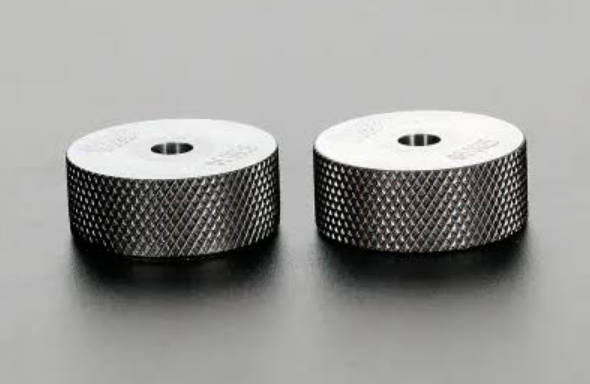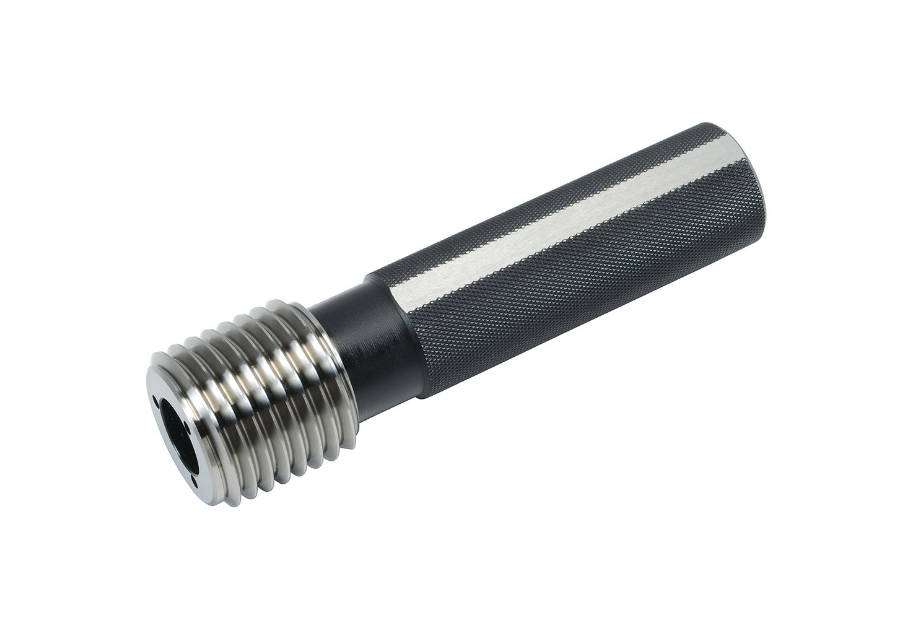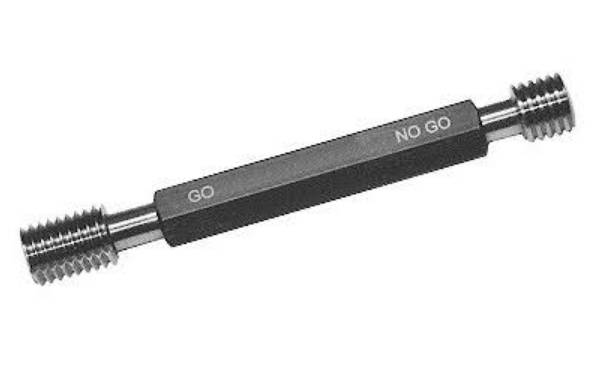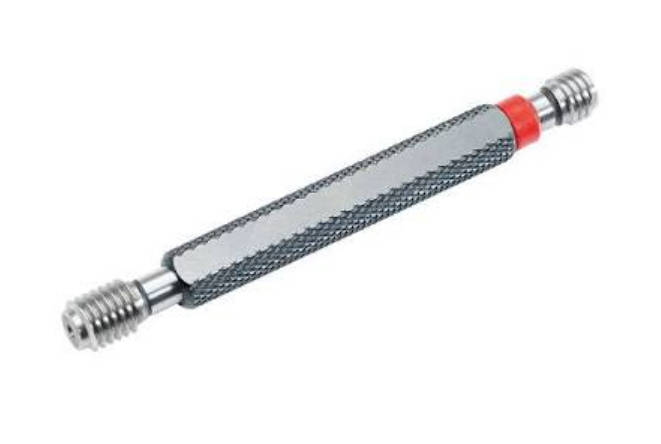
A drawing for a lead screw arrives at the quality department.
At first glance, the thread looks trapezoidal.
That does not mean any trapezoidal-looking thread gauge can be used to inspect it.
ACME and metric trapezoidal threads belong to the same broad family of power-transmission thread forms, but they use different profile geometry, dimensional systems, designations and tolerance rules.
ACME threads normally use a 29° included thread angle, while ISO metric trapezoidal threads use a 30° included angle.
That one-degree difference may look small on paper, but it means the thread profiles are not the same.
As a result:
An ACME thread gauge should not be substituted for a metric trapezoidal thread gauge simply because the nominal diameter appears similar.
For quality departments inspecting lead screws, nuts and power-transmission threads, the correct gauge must match the actual thread standard shown on the drawing.
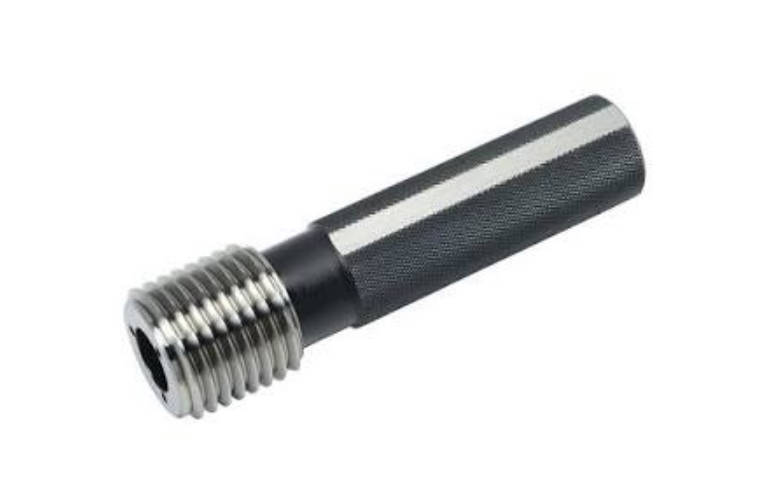
MISHUTE provides precision thread gauges for lead screw inspection covering both ACME and metric trapezoidal thread requirements.
Start With the Drawing Callout, Not the Shape of the Thread
The easiest way to choose the wrong gauge is to look at the component and say:
“It looks like a trapezoidal thread.”
Instead, look at the designation.
A drawing may contain something similar to:
Tr 40 × 7
or an ACME designation using an inch nominal diameter and threads-per-inch specification.
These callouts immediately tell the inspector that the two threads belong to different systems.
If You See “Tr”
The drawing is generally pointing toward an ISO-style metric trapezoidal thread system.
The specification is normally organized around:
- Metric nominal diameter
- Pitch in millimeters
- Tr designation
- Applicable tolerance class
- Thread hand
- Number of starts where relevant
If You See an ACME Designation
The drawing belongs to an ACME thread system.
The specification commonly involves:
- Inch nominal diameter
- Threads per inch
- ACME thread class
- General-purpose or other applicable ACME form
- Thread hand
- Single-start or multi-start configuration
This is why the first purchasing question should be:
What thread standard does the component drawing actually specify?
Not:
Which gauge looks approximately correct?
The One-Degree Difference Is More Important Than It Sounds
The basic geometry provides the clearest visual distinction.
| Thread System | Included Thread Angle | Common Identification |
| Metric Trapezoidal | 30° | Tr |
| ACME | 29° | ACME |
MISHUTE’s thread-gauge range distinguishes trapezoidal thread gauges for 30° metric Tr profiles from ACME gauges intended for 29° thread forms.
Why does one degree matter?
Because a thread gauge evaluates the functional relationship between several thread elements—not only outside diameter.
These include:
- Thread flanks
- Pitch diameter
- Lead
- Pitch
- Major and minor diameter relationships
- Profile geometry
If the flank angle is wrong, the gauge does not correctly represent the mating thread.
Thread gauges are profile-specific inspection tools; matching nominal diameter alone is not enough.
Do Not Convert a Metric Tr Size Into an “Equivalent” ACME Gauge
This is a common engineering shortcut that should be avoided.
Suppose a metric trapezoidal lead screw has a diameter that happens to be close to an inch ACME size.
A buyer may think:
The diameters are nearly the same. Can we use the ACME gauge we already have?
Usually, that is the wrong approach.
The two systems may differ in:
- Thread angle
- Pitch system
- Basic profile
- Pitch diameter limits
- Crest/root geometry
- Allowance
- Tolerance classification
Even if two nominal diameters are close, their functional thread envelopes may not be.
A gauge must correspond to the thread specification—not simply the nearest physical diameter.
Metric Pitch vs Threads Per Inch Changes the RFQ
Another difference appears in how thread spacing is communicated.
Metric Trapezoidal Threads
The drawing normally uses pitch in millimeters.
For example:
Tr 40 × 7
indicates a metric trapezoidal thread with a nominal diameter and metric pitch.
For multi-start threads, the complete designation may also need to distinguish pitch from lead.
ACME Threads
ACME specifications commonly use threads per inch (TPI).
For example, the purchasing information may identify:
- Nominal inch diameter
- Number of threads per inch
- Class
- Hand
This means an RFQ saying:
40 mm trapezoidal thread gauge
is incomplete.
So is:
1-inch ACME gauge
The pitch or TPI must also match.
Pitch and Lead Become Critical on Multi-Start Threads
Power-transmission threads frequently use multiple starts to obtain faster axial travel.
This creates another source of purchasing mistakes.
Pitch
Distance between adjacent thread forms.
Lead
Axial distance traveled in one complete revolution.
For a single-start thread:
Lead = Pitch
For a multi-start thread:
Lead = Pitch × Number of Starts
A three-start screw therefore moves farther per revolution than a single-start screw with the same pitch.
When ordering a lead screw thread gauge, the buyer should identify multi-start geometry explicitly instead of supplying only nominal diameter and pitch.
For multi-start ACME or trapezoidal threads, lead and number of starts are part of the inspection specification.
Internal Thread or External Thread? The Gauge Changes Again
After identifying ACME vs Trapezoidal, the next question is:
Are you inspecting the screw or the nut?
The answer determines the gauge type.
Internal Thread: Use a Thread Plug Gauge
Examples:
- Lead screw nut
- Threaded housing
- Internal power-transmission component
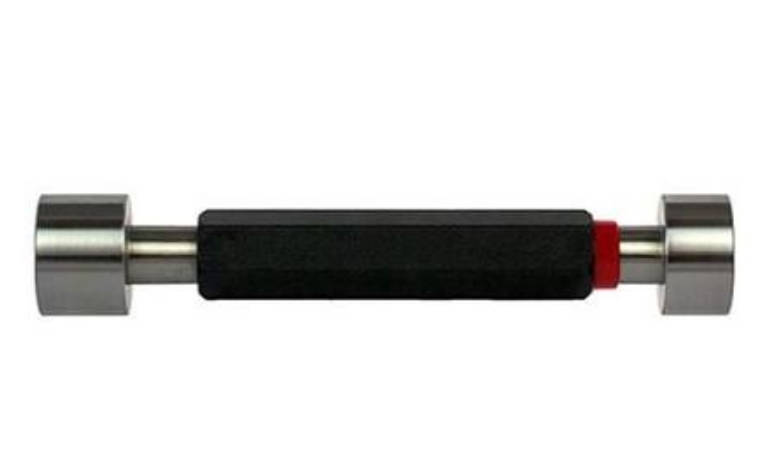
The corresponding GO/NO-GO thread plug gauge checks the internal thread.
External Thread: Use a Thread Ring Gauge
Examples:
- Lead screw
- Threaded spindle
- Power screw
- External actuator thread
The corresponding thread ring gauge checks the external thread.
| Component | Thread Type | Typical Gauge |
| ACME nut | Internal | ACME thread plug gauge |
| ACME lead screw | External | ACME thread ring gauge |
| Trapezoidal nut | Internal | Tr thread plug gauge |
| Trapezoidal lead screw | External | Tr thread ring gauge |
This seems straightforward, but RFQs often arrive simply asking for:
ACME thread gauge.
That leaves half the specification unresolved.
Four Gauge Orders That Sound Similar but Are Completely Different
Consider these four purchasing requests.
Request A
Tr 40 × 7 internal thread
Requires a metric trapezoidal plug-gauge solution.
Request B
Tr 40 × 7 external thread
Requires the corresponding trapezoidal ring-gauge solution.
Request C
1-inch ACME internal thread
Requires an ACME plug gauge with the correct TPI and class.
Request D
1-inch ACME external thread
Requires an ACME ring gauge.
The words “lead screw gauge” could describe all four.
That is why procurement must identify the complete thread system.
ACME Is Not Simply the “Inch Version” of Trapezoidal Thread
As a quick purchasing shortcut, people sometimes describe:
- Trapezoidal = metric
- ACME = inch
This is useful as an initial orientation, but it should not become the technical definition.
The more important difference is that they are separate thread systems with their own geometry and dimensional rules.
A buyer should therefore think:
ACME specification → ACME gauge
and:
Metric Tr specification → metric trapezoidal gauge
rather than trying to convert one system into the other.
This avoids problems where a converted diameter looks reasonable while the actual thread profile is incompatible.
Where These Threads Are Commonly Used
Both thread forms are associated with applications where rotational motion is converted into linear motion or where substantial axial loads must be transmitted.
Typical components include:
- Lead screws
- Machine slides
- Linear actuators
- Lifting mechanisms
- Positioning systems
- Clamping mechanisms
- Adjustment screws
- Industrial machinery
Their application overlap is exactly why inspectors sometimes confuse the two.
The machine function may be similar.
The thread specification is not.
For manufacturers producing these components, ACME and trapezoidal thread gauges allow the inspection method to follow the specified thread system rather than the general application.
Which Dimensions Does the Thread Gauge Actually Control?
A thread gauge should not be thought of as a simple diameter checker.
During functional engagement, several thread characteristics affect whether the GO member can mate correctly.
Potential influences include:
- Pitch diameter
- Thread angle
- Pitch
- Lead
- Taper or drunkenness
- Form error
- Crest/root interference
This is one reason functional GO/NO-GO gauging is useful for production thread inspection.
A thread may have one individually measured characteristic inside tolerance while still failing functional assembly.
GO and NO-GO Logic Is Similar, but the Gauge Geometry Is Not Interchangeable
Both ACME and trapezoidal thread inspection can use limit-gauge logic.
For an internal thread:
GO Thread Plug
Should engage according to the required functional inspection condition.
NO-GO Thread Plug
Checks the opposing limit and should not exceed the permitted engagement condition.
For external threads, corresponding ring gauges perform the external inspection.
The general inspection concept may therefore look similar.
But the actual gauge dimensions and profiles are based on different thread standards.
The inspection logic can be similar while the physical gauges remain completely different.
What Happens If the Wrong Gauge Is Used?
Several outcomes are possible.
False Rejection
A conforming thread may fail because the gauge profile does not match the specified thread system.
False Confidence
A partially engaging gauge may appear acceptable to an inexperienced operator even though it does not represent the correct functional boundary.
Gauge Damage
Forcing an incompatible profile can damage:
- Gauge flanks
- Workpiece threads
- Entry threads
Production Confusion
Quality personnel may begin adjusting:
- Tool offsets
- Thread grinding
- Tool geometry
- Cutting parameters
when the real problem is simply the wrong gauge.
The correct response to unexpected thread-gauge engagement is therefore not force.
It is specification verification.
A 29° Gauge Is Not a Substitute for a 30° Gauge
This deserves repeating because it is the most recognizable physical difference.
Consider the flank relationship.
A 29° ACME gauge is designed to mate with a 29° ACME profile.
A 30° trapezoidal gauge represents a 30° metric Tr profile.
Even though the difference is only one degree overall, precision thread gauging works at much smaller dimensional scales than casual visual inspection.
Never approve substitution solely because the gauges can start threading into the same component.
Partial engagement does not prove correct thread conformity.
The Tolerance Class Must Match the Drawing Too
Profile type is only one part of the specification.
After identifying ACME or Tr, the buyer still needs to determine the applicable thread tolerance/class.
ACME specifications may use classes associated with the selected ACME system.
Metric trapezoidal threads use their own tolerance designations.
Do not assume that:
- An ACME class converts directly to a Tr class
- The same tolerance label applies to both
- A general metric thread class such as 6H automatically applies to every Tr thread
The correct classification should come from:
- Drawing
- Applicable standard
- Customer specification
- Approved engineering requirement
When the drawing is unclear, ask engineering before ordering the gauge.
Left-Hand Threads Need Left-Hand Gauges
Power screws are more likely than ordinary fasteners to use special motion-oriented configurations.
This includes left-hand threads.
A right-hand gauge cannot simply be used because:
- Diameter matches
- Pitch matches
- Profile matches
Thread hand must also correspond.
An RFQ should clearly state:
- RH — Right hand
- LH — Left hand
This is especially important when purchasing custom thread gauges for non-standard lead screws or special machinery.
Multi-Start Threads Need More Than a Standard Size Callout
A multi-start power screw may be selected when greater linear travel per revolution is required.
For gauge sourcing, tell the manufacturer:
- Nominal diameter
- Pitch
- Lead
- Number of starts
- Thread hand
- Internal/external
- Required tolerance
- Applicable thread system
Do not submit only:
Tr 30 × 6 gauge
if the drawing actually specifies a multi-start configuration requiring additional definition.
The complete drawing is preferable for unusual threads.
Trapezoidal vs ACME Gauge Selection Table
| Buying Question | Metric Trapezoidal | ACME |
| Basic profile | Trapezoidal | ACME |
| Included angle | 30° | 29° |
| Common dimensional system | Metric | Inch |
| Pitch expression | Millimeters | Commonly TPI |
| Typical drawing identifier | Tr | ACME |
| Internal inspection | Tr thread plug gauge | ACME plug gauge |
| External inspection | Tr thread ring gauge | ACME ring gauge |
| Lead screw application | Common | Common |
| Multi-start versions | Possible | Possible |
| Directly interchangeable? | No | No |
This table is useful for identification, but the final gauge should always follow the actual engineering specification.
Three Drawing Clues That Quickly Tell You Which Gauge Family to Investigate
When the purchasing request reaches you without much explanation, look for these clues.
Clue 1: The Prefix
Tr strongly points toward metric trapezoidal threads.
ACME points toward the ACME system.
Clue 2: Pitch Format
Metric pitch values strongly support a Tr specification.
TPI strongly supports an inch ACME specification.
Clue 3: Standard or Tolerance Class
The referenced thread standard or tolerance system normally confirms which gauge family is required.
If these clues conflict with each other, do not guess.
Send the drawing for technical review.
A Practical Example: The Wrong Gauge Was Ordered
Imagine a company imports a replacement lead screw.
Purchasing sees:
- Approximately 25 mm diameter
- Trapezoidal-looking profile
An existing ACME ring gauge is close in size, so QC tries it.
The gauge begins to engage but becomes tight.
The first assumption is:
The new supplier’s screw is wrong.
But engineering later checks the original drawing and finds a metric Tr designation.
The problem was never the lead screw.
It was the inspection tool.
This scenario demonstrates why visual similarity is not enough for special threads.
When Should You Use a Custom Gauge?
Standard gauges are practical when the drawing follows standard:
- Diameter
- Pitch/TPI
- Class
- Thread form
Custom gauge manufacturing becomes more relevant when the thread includes:
- Non-standard diameter
- Special pitch
- Unusual class
- Left-hand configuration
- Multi-start thread
- Special functional requirement
- Customer-specific inspection limits
For these projects, buyers should supply the drawing rather than attempting to summarize the complete thread in a short email.
A custom lead screw thread gauge should be defined from the actual mating geometry and inspection requirement.
What Should You Send in the RFQ?
For either ACME or trapezoidal gauges, provide a structured specification.
| RFQ Field | Information Required |
| Thread system | ACME / Metric Trapezoidal |
| Gauge function | Plug / Ring |
| Inspection side | Internal / External |
| Nominal diameter | Drawing value |
| Pitch or TPI | Complete thread spacing |
| Thread angle/profile | Per specified system |
| Tolerance/class | Drawing requirement |
| Thread hand | RH / LH |
| Number of starts | Single / Multi-start |
| Lead | Required for multi-start |
| GO/NO-GO | Required configuration |
| Material | According to application |
| Quantity | Number of gauges/sets |
| Documentation | Inspection/calibration requirements |
| Drawing | Strongly recommended for special threads |
A request saying:
Need one trapezoidal gauge.
is not quote-ready.
A request saying:
Tr 40 × 7, internal RH thread, GO/NO-GO plug gauge, required tolerance per attached drawing
is far more useful.
Do Material Choices Change Between ACME and Tr Gauges?
The thread system and gauge material are separate decisions.
First choose the correct profile.
Then choose material according to:
- Inspection frequency
- Gauge size
- Wear
- Corrosion environment
- Handling
- Budget
MISHUTE’s precision thread gauge solutions cover multiple special thread systems and material configurations for different inspection conditions.
The material does not convert:
- ACME into Tr
- Tr into ACME
Geometry comes first.
Five Purchasing Errors to Avoid
1. Ordering by Diameter Only
Thread profile and pitch are equally important.
2. Assuming ACME and Trapezoidal Are Equivalent
Their thread angles and dimensional standards differ.
3. Forgetting Internal vs External Thread
This determines plug versus ring gauge.
4. Ignoring Multi-Start Information
Lead can differ from pitch.
5. Sending “Lead Screw Gauge” Without the Drawing
Lead screw is an application, not a complete gauge specification.
Frequently Asked Questions
What is the main difference between trapezoidal and ACME thread gauges?
The main profile difference is the included thread angle: metric trapezoidal threads use a 30° profile, while ACME threads use a 29° profile. Their dimensional and tolerance systems also differ.
Can an ACME thread gauge check a trapezoidal thread?
No. The gauges are designed around different thread profiles and dimensional systems. A gauge should match the thread standard specified on the component drawing.
Are trapezoidal threads metric?
ISO-style trapezoidal threads are commonly metric and use the Tr designation with pitch expressed in millimeters.
Are ACME threads inch threads?
ACME threads are commonly specified using inch nominal dimensions and threads per inch. The complete drawing specification should always be checked before selecting the gauge.
What gauge checks an internal trapezoidal thread?
An appropriate trapezoidal thread plug gauge is used for internal Tr threads.
What gauge checks an external ACME lead screw?
An ACME thread ring gauge is used for external ACME threads when GO/NO-GO limit inspection is required.
What does Tr mean on a thread drawing?
Tr identifies a metric trapezoidal thread designation. The following values normally identify the nominal diameter and pitch, with additional information included where required.
Why are ACME and trapezoidal threads used for lead screws?
Both thread families are suitable for transmitting motion and axial loads, making them common in lead screws, actuators, positioning mechanisms and industrial machinery.
Can ACME and trapezoidal gauges inspect multi-start threads?
Special multi-start gauges can be produced when the thread specification is clearly defined. The RFQ should identify pitch, lead, number of starts, hand and tolerance requirements.
What should I provide when ordering a lead screw thread gauge?
Provide the thread system, nominal diameter, pitch or TPI, internal/external thread, tolerance class, hand, number of starts, GO/NO-GO requirement, quantity and drawing.
Should I send a drawing for a custom ACME or trapezoidal gauge?
Yes. A drawing is particularly valuable for special diameters, multi-start threads, left-hand threads, unusual pitches or customer-specific tolerance requirements.
Conclusion: Identify the Thread System Before You Select the Gauge
ACME and metric trapezoidal threads may perform similar jobs in machinery, but they are not the same thread.
The fastest way to avoid buying the wrong gauge is to check the drawing in this order:
1. Thread designation
2. Nominal diameter
3. Pitch or TPI
4. Internal or external thread
5. Tolerance/class
6. Right-hand or left-hand
7. Number of starts and lead
Then select the gauge.
Use an ACME gauge for an ACME thread and a metric trapezoidal gauge for a Tr thread. Do not substitute one merely because the nominal diameter is similar.
For production inspection of lead screws, nuts, actuators and other power-transmission threads, MISHUTE provides ACME and trapezoidal thread gauges in plug, ring, GO/NO-GO and customized configurations.
For special pitch, left-hand, multi-start or non-standard thread requirements, buyers can work with a precision thread gauge manufacturer and provide the complete drawing for technical review.